Hey there! As a supplier in the magnesium die casting business, I’ve seen firsthand how impurities can mess with the whole process. So, I thought I’d share my thoughts on what the effects of impurities on magnesium die casting are. Magnesium Die Casting
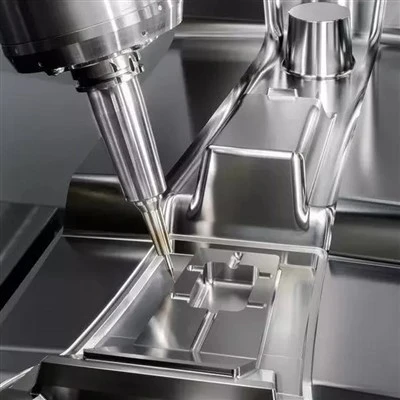
Let’s start with the basics. Magnesium is an awesome metal for die casting. It’s super lightweight, yet it has good strength and excellent dimensional stability. That’s why it’s used in a bunch of industries, like automotive, aerospace, and electronics. But when impurities sneak into the mix, things can go south real fast.
One of the most common impurities in magnesium die casting is iron. Iron can come from a few sources, like the raw materials or the equipment used in the casting process. When iron is present in the magnesium alloy, it can form intermetallic compounds. These compounds are hard and brittle, and they can cause a whole host of problems.
For starters, these intermetallic compounds can reduce the ductility of the magnesium alloy. Ductility is how much a material can be stretched or deformed without breaking. In die casting, good ductility is crucial because it allows the part to be formed into the desired shape without cracking. When the ductility is reduced due to iron impurities, the parts are more likely to crack during the casting process or when they’re being used in real-world applications.
Another issue with iron impurities is that they can increase the porosity of the castings. Porosity is the presence of small holes or cavities in the material. It weakens the part and can also affect its surface finish. In magnesium die casting, parts with high porosity are not only weaker but also less aesthetically pleasing. This is a big no – no, especially in industries where appearance matters, like electronics or consumer goods.
Copper is another impurity that can have a significant impact on magnesium die casting. Copper can form hard phases in the magnesium alloy, which can lead to increased hardness and reduced machinability. When a part is hard to machine, it takes more time and effort to finish it to the required specifications. This means higher production costs and longer lead times.
Moreover, copper can also cause corrosion problems. Magnesium is already a relatively reactive metal, and the presence of copper can accelerate the corrosion process. In applications where the parts are exposed to moisture or harsh environments, this can lead to premature failure of the components. For example, in automotive parts that are constantly exposed to road salt and water, corrosion due to copper impurities can be a major headache.
Silicon is yet another impurity that we need to watch out for. Silicon can form silicon – rich phases in the magnesium alloy. These phases can be quite hard and can cause wear on the die casting equipment. Over time, this can lead to increased maintenance costs and reduced tool life.
On top of that, silicon can also affect the fluidity of the molten magnesium. Fluidity is how easily the molten metal can flow into the die cavity. If the fluidity is poor, the casting may not fill completely, resulting in incomplete parts. This is a huge problem because it means wasted materials and time.
Now, let’s talk about how these impurities affect the mechanical properties of the magnesium castings. As I mentioned earlier, impurities like iron, copper, and silicon can reduce the ductility, increase the hardness, and affect the strength of the parts. In industries where parts need to withstand specific loads and stresses, these changes in mechanical properties can be disastrous.
For example, in the aerospace industry, where weight savings are crucial but parts also need to be incredibly strong and reliable, any deviation from the required mechanical properties can put the safety of the aircraft and its passengers at risk. Similarly, in the automotive industry, parts need to be able to handle vibrations, impacts, and different driving conditions. If the mechanical properties are compromised due to impurities, it can lead to failures on the road.
From a quality control perspective, dealing with impurities is a constant battle. We have to monitor the raw materials carefully to make sure they meet the required purity standards. We also use advanced analysis techniques to detect the presence of impurities in the molten metal. Once we detect impurities, we have to decide whether to try and remove them or adjust the casting process to minimize their impact.
Removing impurities from molten magnesium is not an easy task. It often involves adding certain additives or using special purification techniques. These methods can be expensive and time – consuming, but they’re necessary to produce high – quality castings.
In addition to the technical challenges, impurities can also have an impact on our business. If our customers receive parts with issues due to impurities, it can damage our reputation. They may lose trust in our products and look for other suppliers. This is why we take the issue of impurities very seriously.
We’re constantly investing in research and development to find better ways to control and reduce impurities in our magnesium die casting process. We’re also working closely with our raw material suppliers to ensure that the materials we receive are of the highest quality.
So, if you’re in the market for magnesium die – cast parts, you need to be aware of the effects of impurities. You want to work with a supplier who understands these issues and has the expertise and technology to produce high – quality, impurity – free parts.
At our company, we’ve been in the magnesium die casting game for a long time. We’ve seen it all when it comes to impurities, and we’ve developed effective strategies to deal with them. We use state – of – the – art equipment and techniques to ensure that our parts meet the strictest quality standards.

If you’re interested in learning more about our magnesium die casting services or if you have specific requirements for your projects, don’t hesitate to reach out. Contact us to start a conversation about your procurement needs. We’re here to help you find the best solutions for your magnesium die – cast parts.
Aluminum Die Casting References
- "Magnesium Alloys and Their Applications" by B. L. Mordike and T. Ebert
- "Die Casting: A Tooling and Processing Manual" by R. A. Neufeld
Shenzhen Shunhaoda Technology Co., Ltd.
With abundant experience, we are one of the most professional magnesium die casting manufacturers and suppliers in China. If you’re going to buy bulk high quality magnesium die casting made in China, welcome to get free sample from our factory. Also, custom service is available.
Address: 902, Building A3, Tianrui Industrial Park, No. 35 Fuyuan 1st Road, Zhancheng Community, Fuhai Street, Bao’an District, Shenzhen
E-mail: sales@shdindustry.com
WebSite: https://www.shd-industry.com/
