If you’ve ever planned to build or order a custom carport, one of the most common questions I get from customers on our team is, “What size should the posts be?” It’s not a trivial detail, either—cut corners here, and your carport might sag under rain, snow, or even the weight of a heavy vehicle over time. I’ve been supplying carports to homeowners, small business owners, and farmers across the Midwest for nearly a decade, and I can’t tell you how many times a customer has tried to skimp on post size to save a few dollars, only to call us a year later asking to reinforce a wobbly structure. Let’s break down exactly what goes into choosing the right carport post size, no confusing engineering jargon required. Carport
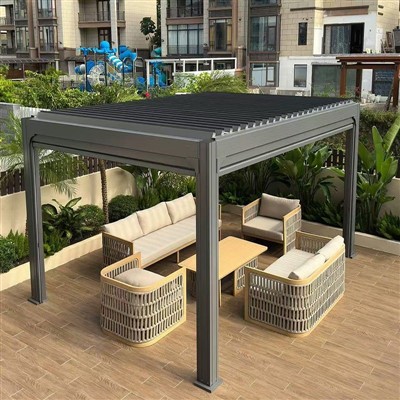
First, let’s start with why post size matters so much. A carport’s posts aren’t just decorative sticks holding up a roof—they’re the foundation that transfers all the weight of the roof (plus whatever is on top of it: snow, ice, wind, even a ladder leaning against the side) to the ground below. If your posts are too thin or made of the wrong material, they’ll bend, crack, or even pull out of the ground entirely. That not only ruins the carport’s look; it can leave your vehicles unprotected during a storm or lead to expensive repairs down the line. I’ve seen a customer’s 2-car carport collapse last winter because he used 4×4 posts instead of the required 6×6 for his area’s 3 feet of snow load. He saved $150 on materials upfront, but ended up paying $2,000 to rebuild and replace two pickup trucks that were damaged when the roof caved in. That’s a mistake I don’t want any of our customers to make.
Now, the biggest factors that dictate carport post size: type of carport, span of the roof, local building codes, and environmental conditions. Let’s go through each one because none of them work in a vacuum. For example, a free-standing metal carport for one vehicle will have different post needs than a fully enclosed pole barn-style carport that stores heavy equipment.
First, carport style and roof span. If you’re ordering a standard single-car carport (usually 12 feet wide) with a simple gable roof, the posts don’t need to be as thick as a larger structure. But a double-car carport is often 20 to 24 feet wide, so the span between posts gets longer, which means each post has to support more weight. Let’s talk about common post dimensions we use, which are based on years of field testing and compliance with standard building codes for residential structures. For most residential free-standing carports, the minimum post size is 4×4 for single-car units with a roof span under 15 feet. But here’s the catch: that’s only if you’re in a mild climate with no snow load to speak of. If you live in an area with regular snow, heavy wind, or high humidity, 4×4 posts are almost never enough. For double-car carports, the standard minimum jumps to 6×6 posts, and for larger carports that store RVs or farm equipment (which can be 30 feet wide or more), we often use 8×8 posts or even 6×6 posts with additional bracing to handle the extra weight.
Next, local building codes. This is non-negotiable, and I always advise customers to check with their local building department before ordering any structure—even a carport. Codes aren’t just random rules; they’re written to keep you and your property safe. For example, in the Northeast U.S., where snow loads can reach 50 pounds per square foot or more, building codes typically require 6×6 posts for double-car carports and may even demand concrete footings larger than what you might use in the South, where snow is rare. In Florida, high wind speeds mean posts need extra strength to resist being blown over, so even small carports might require thicker posts than you’d find in a low-wind area. I had a customer in Miami try to order a standard 4×4 double-car carport a few years back, and the city inspector rejected it before he even put it up. He had to order thicker posts, which cost him more, but now his carport easily withstands hurricane-force winds. That’s a lot cheaper than replacing your carport and your car after a storm.
Material type also plays a huge role in post size. Most carport posts we supply are either wood (pine, cedar, or pressure-treated lumber) or steel. Steel posts are much stronger for their size than wood, so you can get away with a smaller diameter for steel posts. For example, a 3-inch steel pipe post is equivalent in strength to a 6×6 wood post. But steel posts are often more expensive, and some customers prefer the natural look of wood, or need posts that blend in with their property’s landscape. Pressure-treated wood is the most popular for residential carports because it’s resistant to rot, insects, and moisture, which is crucial for posts that are partially buried in the ground or sitting on concrete footings. If you use non-pressure-treated wood, it will rot in a few years, so even if you save money upfront, you’ll be replacing posts sooner. I always recommend pressure-treated wood for any post that touches the ground.
Let’s get into common myths I hear all the time about carport post size. First myth: “Thicker posts are always better.” Not necessarily—you don’t want posts that are unnecessarily thick, because that adds extra cost and can make your carport look bulky or out of place on your property. For example, a single-car carport in Texas, where snow is almost unheard of, will be fine with 4×4 posts. If you order 8×8 posts for that same structure, you’re wasting money and creating a structure that’s overbuilt for your needs. The goal is to match the post size exactly to your location and carport use. Another myth: “I can use chain-link fence posts for my carport.” Chain-link posts are thin, designed to support light fence fabric, not a roof that can hold hundreds of pounds of snow. I’ve seen customers try this, and within a year, the posts bend and the roof sags. It’s never a good idea to repurpose posts made for a different purpose.
Now, let’s talk about proper installation, because even the best post size won’t work if it’s installed wrong. Post size only matters if the post is securely anchored to the ground. For most residential carports, posts need to be set at least 2 feet deep in the ground, with concrete footings around them. The footing should be at least 12 inches in diameter for a 4×4 post, and 18 inches for a 6×6 post. If you just set a post in a shallow hole with dirt, it will shift over time, especially in soft soil or during heavy rain and wind. We include detailed installation instructions with every carport we supply, but I always tell customers to hire a licensed contractor if they’re not comfortable digging footings and setting posts themselves. A friend of mine tried to install his own 2-car carport, used 6×6 posts, but set them only 1 foot deep in loose soil. Last spring, a heavy rain flooded his yard, and the posts tilted, pulling the roof out of alignment. He had to tear it all down and start over. That’s a mistake that’s easy to avoid with the right installation.
So, what size post should you actually order? Let’s get specific with examples based on common use cases, which is what our customers ask for most. If you have a single car (sedan, compact SUV) and live in a mild climate with low snow and wind: 4×4 pressure-treated wood posts, set 2 feet deep in 12-inch concrete footings. If you have a single car but live in an area with 2+ feet of snow or wind speeds over 50 mph: upgrade to 6×6 posts, set 2.5 feet deep in 18-inch footings. For a double-car carport (two full-size pickup trucks or SUVs) in a mild climate: 6×6 posts, set 2.5 feet deep, 18-inch footings. For a double-car carport in a snowy or high-wind area: upgrade to 8×8 posts, or if you prefer steel, 4-inch diameter steel posts for equivalent strength. If you’re storing an RV, boat, or farm equipment in a carport (structures that are often 30+ feet wide): 8×8 posts, or 6-inch steel posts, with footings at least 24 inches in diameter, and often additional cross-bracing between posts to support the extra roof span.
I know this can feel overwhelming, especially if you’re not familiar with building materials or codes. That’s why our team is here—we’ve helped thousands of customers choose the right carport size, post dimensions, and materials for their specific needs. We don’t just sell a one-size-fits-all carport; we work with each customer to make sure their structure is safe, durable, and fits their budget. Whether you’re putting up a small carport for your daily driver or a large equipment shelter for your farm, we can answer all your questions about post size, materials, and installation to make sure your project goes smoothly.

If you’re ready to order a carport, or just want more details on what size will work for your property, don’t hesitate to reach out to our team to discuss your requirements. We’re here to help you make the right choice for your home or business, so you can protect your vehicles and equipment for years to come.
Cassette Awning References
- International Residential Code (IRC) for One- and Two-Family Dwellings, 2021 Edition, International Code Council.
- National Association of Home Builders (NAHB), “Guide to Outdoor Structure Construction,” 2022.
- American Wood Council, “Technical Guide for Lumber Design in Residential Structures,” 2021.
- Steel Framing Industry Association, “Light Gauge Steel Post Design for Residential Structures,” 2020.
Guangdong Fanxi Youpin Intelligent Technology Co., Ltd.
We are one of the most professional carport manufacturers and suppliers in China, also support customized service with low price. We warmly welcome you to buy high quality carport for sale here from our factory. If you have any enquiry about pricelist, please feel free to email us.
Address: No.22-2 Of Xiaodong Industrial Zone, Xiaodong Second Economic Society, Yanfeng Community, Shishan Town
E-mail: faiman@fshpyp.cn
WebSite: https://www.vancyoutdoor.com/
