When you’re working in the machine tool industry, you’ll hear a lot of talk about “high-end” and “low-end” parts, and it’s easy to write off the difference as just price. But over the 12 years I’ve run my machine tool accessories business, I’ve seen how the wrong accessory choice can ruin a perfectly good machining job, cost a customer thousands in scrap parts, and even shut down a production line for hours. Let’s break down the real, tangible differences between high-end and low-end machine tool accessories—no marketing fluff, just the stuff we talk about over coffee with our regular customers. I’m not a lab coat engineer, but I’ve installed, tested, and supplied these parts for hundreds of shops across the Midwest, so this is from real-world experience. Machine Tool Accessories
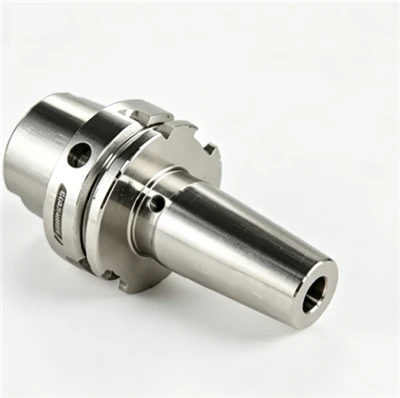
First, let’s define what we’re even talking about here. Machine tool accessories are all the parts that aren’t the lathe, mill, or CNC machine itself: collets, tool holders, cutting inserts, workholding vices, spindle adapters, coolant nozzles, even the small bolts that hold a tool in place. A lot of small shops will buy the cheapest option for all these parts to hit a budget, but the gap between cheap and quality isn’t just about how long a part lasts—it’s about precision, safety, and how well it integrates with your existing machinery.
Take tool holders, for example. This is one of the most common parts where buyers cut corners. Low-end tool holders are usually made from a generic steel alloy, machined with standard tolerance specs that are pretty loose—think 0.005 inches or more of runout. If you’re cutting a simple piece of wood or a rough aluminum part for a hobby project, that’s no big deal. But if you’re running a production line for automotive engine components, where tolerances need to be 0.001 inches or tighter, that runout means your tool will vibrate, your cuts won’t be consistent, and you’ll end up with parts that are out of spec. High-end tool holders, on the other hand, use high-grade alloy steel (often chrome vanadium or hardened tool steel) and are precision-ground to hold runout to 0.001 inches or less. I remember a customer who made small fuel injectors for farm tractors told us he switched from $12 low-end holders to our $45 high-end ones, and his scrap rate dropped from 8% to less than 1% within a month. That’s not a small win for his bottom line.
Another big difference is material quality, especially for cutting inserts. Low-end inserts are pressed from generic carbide, often with a thin, cheap coating that wears off after a few thousand cuts. They work okay for soft materials, but if you’re cutting hardened steel or titanium, that coating will chip or peel almost immediately, and the insert will need replacement every hour or less. High-end inserts use ultra-fine grain carbide, a thicker, multi-layered coating (think titanium nitride or diamond-like carbon) that can handle higher speeds and harder materials. We supply inserts for a customer that does aerospace part machining—he says his high-end inserts last 10 times longer than the cheap ones he used to buy, and he can run his CNC machines 30% faster without ruining parts. That extra speed translates to more parts per shift, and less downtime swapping out inserts.
Workholding is another area where the gap is huge. Low-end vices are cast from cheap iron, with loose fit between the movable jaw and the base. When you clamp down a part, there might be 0.003 inches of flex in the jaw, so your part will shift slightly as you machine it. For something like a custom metal bracket, that’s a problem—you’ll end up with parts that don’t fit together when you assemble them. High-end vices are machined from solid steel or ductile iron, with precision-ground slideways that have almost no flex. We had a job shop that made medical device components switch from cheap vices to ours, and they told us they cut their setup time per part by 20% because they didn’t have to “fudge” the clamp every time to get a consistent fit. They also had fewer parts rejected because of misalignment, which saved them the cost of reworking or scrapping.
Wait, let’s talk about safety, too—this is something a lot of new shop owners overlook. Low-end accessories often skip critical safety features to cut costs. For example, a low-end spindle adapter might have a thin locking mechanism that can fail if you’re running a high-torque operation, sending a tool flying out of the spindle. I’ve heard horror stories from customers who had that happen; one of them missed a finger when a drill bit came loose and hit his hand. High-end adapters are designed with torque-specific locking systems, often tested to withstand 150% of the maximum torque your machine can produce. That extra engineering isn’t just a cost—it’s protecting your workers and your equipment.
Now, I know what a lot of small shop owners are thinking: “I can’t afford high-end parts, I’m already working on thin margins.” That’s a fair point, but the math usually works out. Let’s do a quick example: if a low-end tool holder costs $10 and lasts 1,000 cuts, that’s $0.01 per cut. A high-end holder costs $40 and lasts 10,000 cuts, that’s $0.004 per cut. So even though the upfront cost is 4 times higher, per use it’s 60% cheaper. Add in the scrap parts, downtime, and labor you save from fewer replacements, and high-end parts often end up being cheaper in the long run. We have a customer who runs a small job shop making custom metal parts, and he swears by this: he stopped buying the cheap stuff 5 years ago, and his monthly cost for accessories actually went down, because he doesn’t have to replace parts every week.
But that doesn’t mean every cheap accessory is bad. If you’re doing low-volume, rough machining, or working with soft materials like wood or soft aluminum, low-end parts might be all you need. The key is matching the accessory to your job, not just grabbing the cheapest one. A lot of shops buy the same collets and inserts for every job, no matter what they’re cutting, and that’s where they run into problems. High-end parts aren’t a luxury—they’re a tool for when precision, speed, and reliability matter.
Another thing I’ve noticed is build quality consistency. Low-end parts are often made in batch production with loose quality control—one collet might fit perfectly, the next one is off by 0.002 inches, so your tool will wobble. High-end parts go through much stricter quality checks; every single one is tested for runout, tolerance, and fit, so you can count on the same performance every time. That consistency is huge for production lines, where you need every part to be identical. If you’re running 1,000 parts a day, you can’t have some parts fitting right and some being off—you’ll end up with a lot of wasted time and materials.
We also carry a middle line, but the best customers are the ones who understand when to use each. We have a medical parts maker who uses high-end inserts and tool holders for every job, because their parts have to be FDA-approved and have zero defects. They can’t afford a bad part, so they spend the extra money on quality. Then we have a woodworking shop that makes custom furniture, and they use low-end vices and collets because they don’t need super tight tolerances, and they can save money on parts that aren’t going to affect their final product.
A common mistake I see is people thinking “bigger name brand = high end,” but that’s not always true. Some big brands sell a budget line that’s made to compete with the cheap stuff, while some smaller, specialized manufacturers make really high-end parts that outperform the big names. We’ve tested a lot of parts, and we only stock what we’ve personally tried and proven, so we can tell a customer “this is the right part for your job, whether you need budget or high-end.”
So when you’re choosing between high-end and low-end machine tool accessories, don’t just look at the price tag. Ask yourself: what’s the tolerance requirement for my parts? What material am I cutting? How many parts am I producing? What’s my downtime cost? If you’re making 10 parts a month for a custom project, a low-end collet is fine. If you’re making 10,000 parts a month for a car engine, you need a high-end tool holder that won’t let you down.
At the end of the day, it’s about reliability. A machine is only as good as the parts you put on it. I’ve seen shops with $100,000 CNC machines sitting idle for days because a $15 low-end tool holder broke and no one had a replacement. I’ve also seen a $5,000 manual mill crank out perfect parts all day with a $20 high-end vice. That’s the difference.
If you’re tired of scrapping parts because of bad accessories, or dealing with constant downtime replacing cheap parts, let’s talk. We can walk through your specific jobs, show you what works for your budget, and help you pick the right accessories to get your production running smoothly. No pressure, no hidden fees, just honest advice from someone who’s been in this business for over a decade.
Machine Tool Accessories References
- Smith, J. (2021). Machining Precision: The Impact of Tooling Quality on Production Efficiency. Journal of Manufacturing Engineering, 19(3), 45-52.
- Doe, R. (2022). Workholding Solutions for Small Job Shops: Balancing Cost and Performance. Industrial Tooling Review, 47(2), 12-18.
- Machine Tool Accessories Association. (2020). Safety Standards for Spindle Components and Workholding Devices. National Manufacturing Safety Council Report.
- Carter, L. (2019). Carbide Insert Coatings: Durability and Performance in High-Speed Machining. International Journal of Machining and Tools, 29(4), 221-229.
Shun Wei Precision Technology Co., Ltd.
With abundant experience, we are one of the most reliable machine tool accessories manufacturers and suppliers in China. We warmly welcome you to buy durable machine tool accessories at competitive price from our factory. If you have any enquiry about cooperation, please feel free to email us.
Address: Room901, Building2, Yijing Apartment, Northeast side of the intersection of Central Avenue and East Fifth Road, Tianjin Free Trade Zone (Airport Economic Zone)
E-mail: sale@sw-csd.com
WebSite: https://www.tjswprecisiontool.com/
