If you’ve ever spent an evening watching your cat knead a crumpled cardboard box, curl into a wicker basket, or hide in the gaps of a wooden crate, you’ve seen it first-hand: cats are drawn to surfaces that let them scratch, squeeze, and feel secure. As the owner of a small, family-run bamboo woven cat bed supplier, I’ve spent the last five years perfecting the art of turning raw bamboo into pieces that check all those boxes—plus look nice enough to not clash with your living room decor. A question I get all the time, though, is not just “where do I buy one of your beds?” but “can I put it together myself, or is it something I need to order pre-made?” Bamboo Woven Cat Bed

The short answer is: yes, you can assemble a bamboo woven cat bed, even if you’ve never picked up a sewing needle or a screwdriver before. But there’s a right way to do it that keeps the bed sturdy, safe for your cat, and true to the sustainable, natural design I build into every piece we supply. I’m writing this because I’ve heard from dozens of customers who tried assembling a cheaper woven cat bed from a big-box store and ended up with a wobbly piece that their cat refused to step on, or worse, pieces that came loose and posed a small choking hazard. Today I’m walking you through the exact process I recommend for our own DIY assemble kits, with tips I’ve picked up fixing or answering questions about hundreds of these beds over the years.
First, let’s talk about why bamboo is such a good choice for cat beds, especially the woven kind. It’s naturally antibacterial, so it won’t hold onto the odors that make cats avoid beds, and it’s strong enough to support a cat’s full weight even with regular use—way stronger than regular wicker or cardboard, which can snap under a 10-pound cat or get chewed through by a teething kitten. It’s also biodegradable, so if your cat loses interest after a year or two, you can compost it instead of tossing it in a landfill. That’s not just a selling point for the supplier; it’s something cat owners I talk to really care about, and it’s part of why we focus on bamboo instead of other materials.
Before you even open your kit, take 10 minutes to go through what comes with it. Our kits (and most good DIY bamboo woven cat bed kits) have four core components: pre-cut bamboo slats, tight, pre-woven bamboo mat that acts as the bed’s base and lining, non-toxic plant-based thread or small, rust-resistant metal staples, and a custom-sized, machine-washable cushion that fits exactly into the base. A lot of cheaper kits skimp on the thread or staples, using thin plastic or steel that will rust in a month. Ours uses food-grade, UV-treated poly-cotton thread that won’t fray, and our kits have extra slats in case you make a small mistake.
The first step is clearing a flat, well-lit workspace. You don’t need a fancy garage or a table—just a spot where you can lay the slats out without them getting crushed or knocked over. I usually do this on a living room rug, since I can sit on the floor right next to it, which makes the process easier if you’re working alone. Once you’re set, sort your slats into two groups: long slats and short slats. For a standard medium-sized cat bed (which works for cats up to 15 pounds, or two small cats), you’ll need four long slats and eight short slats. The long ones will be the sides of the bed, and the short ones will be the cross-supports that keep the woven base from sagging.
Next, build the frame. This is the most important step, because if your frame is lopsided, the woven base will be too, and your cat will feel unstable stepping onto it. Take two long slats and two short slats, and line them up to make a rectangle that’s exactly the size of your woven mat—our mats are cut 1/2 an inch smaller than the finished frame, so leave that gap for now. Screw a small staple into each corner to hold this first rectangle in place, or if you’re using thread, make three tight, running stitches at each corner. This sounds simple, but I’ve seen people skip staples or stitches here and end up with a frame that twists when they add the mat. For extra stability, add one more short slat across the middle of the rectangle, so you have two smaller rectangles inside the big one. That middle slat is what prevents the center of the bed from sagging when your cat curls up there.
Wait a second—what if my cat is extra large? I get that question a lot. Our largest size fits cats up to 20 pounds, and for those, we add two middle slats instead of one, and use slightly thicker bamboo. The same rule applies even if you’re building from scratch without our kit: if your cat is over 15 pounds, add an extra cross-support. Sagging is the number one complaint about woven cat beds, and it’s almost always because there aren’t enough support slats.
Once your frame is done, it’s time to attach the woven bamboo mat. Lay the mat flat, and flip your frame upside down onto the middle of the mat, so the woven side is facing down, and the frame is resting on top of the mat. Now, pull the edges of the mat up around the frame, so the mat is tucked between the slats on all four sides. This gives you a clean, rounded edge instead of sharp corners, which is important for cats—sharp edges can scratch their paws if they’re kneading, and I’ve had customers tell me their kittens stopped trying to use the bed once we switched from sharp, stitched edges to this tucked method.
Now, secure the mat to the frame. Again, skip the cheap plastic staples here—use the thread or rust-resistant metal staples that came with your kit. Start at the middle of one long side, and make a tight stitch (or staple) through the slat and the folded edge of the mat. Do the same on the opposite long side, then move to the short sides. Once you have those four center points secure, work your way from the middle of each side toward the corners, pulling the mat taut as you go. Don’t pull so hard that you stretch the bamboo mat—you just want it tight enough that there are no wrinkles when you flip the bed over. Wrinkles mean the mat will sag over time, especially if your cat uses the bed a lot. The corners are the trickiest part: to tuck the mat neatly here, fold the extra mat over itself at the corner, so it makes a clean triangle, then stitch or staple that folded part to the slat. I usually make two stitches or staples per corner to keep them from coming loose, which is enough without overdoing it.
Once all the sides are secured, flip the bed over. Now you have a basic bamboo basket shape, but it’s not quite a bed yet. The last step is securing the top edge of the sides, so they don’t fold inward when your cat steps on the rim. Take the remaining two long slats—wait, no, hold on, did I forget those? No, those are for the lip of the bed. Oh right, that’s the part that gives the bed its height, and gives your cat a place to rest their head. Take two long slats and attach them to the top of each side slat, using the same stitching or stapling method you used for the bottom frame. This gives the bed a 2-inch lip, which is perfect for small cats to snuggle into, and stops larger cats from knocking the cushion off.
Wait, what about the cushion? Every DIY bamboo cat bed should come with a cushion that fits exactly into the base, right? Ours are made from organic cotton, machine-washable, and don’t have any loose threads that a cat could pull and swallow. When you put the cushion in, make sure it sits flat, not folded over, and that it’s centered so it doesn’t slide to one side when your cat jumps in. Some people add a tiny bit of non-slip tape to the bottom of the cushion, which helps keep it in place on the smooth bamboo, but I usually don’t recommend it because if you ever wash the cushion, the tape can leave a sticky residue on the bamboo. Most cats don’t have a problem with a slightly fitting cushion—they like the snug fit of a bed that’s meant just for them, anyway.
Now, let’s talk about common mistakes I see people make when assembling these beds, because even if you follow all the steps, a small mistake can ruin the whole thing. First, skipping the middle cross-support. I can’t tell you how many people do this, thinking it’s unnecessary, and then their cat jumps in and the whole bed sags so much the cushion falls through the bottom. That’s not safe for your cat, and it’s a waste of your time. Second, using too much force when pulling the mat. Bamboo is strong, but it’s also brittle, and if you pull the mat so tight that it stretches the bamboo, it will crack over time. If you feel like you’re struggling, go slow, and check that your frame is still square—sometimes a twisted frame makes pulling the mat harder. Third, using non-food-grade thread or staples. I’ve had customers use regular craft thread that frayed after a month, or metal staples that rusted, leaving stains on the bamboo and even on their cat’s fur. The materials that come with our kits are tested for safety, so never substitute them with cheaper ones.
Another question I get: is a DIY assembled bed as good as one pre-made? The short answer is yes, as long as you follow the steps above. We supply both pre-assembled beds and DIY kits for people who want to save a little money, or who like the satisfaction of putting something together themselves. The key is that when you build it, you know exactly how it’s put together, so if something does come loose, you can fix it easily, instead of waiting for customer service to get back to you.
If you’re a customer who’s trying this for the first time, start with a medium-sized bed for a cat that’s between 8 and 15 pounds. If you have a kitten, that bed will grow with them, too—most kittens are 5 pounds at 6 months, and by then they’ll have outgrown the medium, so you can upgrade to a large. We also make small beds for senior cats or multiple small cats, and extra-large beds for breeds like Maine Coons or Savannahs.
Now, a little note from my own experience. Five years ago, I started this supplier after my own cat, Mango, a 10-pound tabby, stopped using all the fancy store-bought beds I bought her. She’d only sleep in the old wicker laundry basket I kept in the closet, so I decided to make her a bed out of bamboo, which I knew was sturdy and safe. When I finished building it, she curled up in it immediately, and that’s when I realized how many other cats would love something like that, without the high price of boutique pet beds. Now, every kit we sell has a little extra bamboo slat included, just in case someone like me—back when I was a beginner—made a mistake and needed a replacement.
If you’ve tried assembling a bed before and it didn’t work, don’t give up. Double-check your frame is square, that all the slats are secured tightly, and that you didn’t skip the middle cross-support. If you have questions about adjusting the size, or need help troubleshooting a step, our team is here to help. Whether you’re a cat owner looking for a safe, natural bed for your pet, or a boutique pet store owner looking to stock sustainable bamboo cat beds for your customers, we have options that fit your needs.
Assembling a bamboo woven cat bed is not complicated, but it does take a little patience and attention to detail. The result is a bed that’s sturdy enough to last for years, safe for your cat to use, and stylish enough to be part of your home, not something you hide in a closet. And when your cat chooses it over the cardboard box like Mango did, it’s well worth the 30 minutes you spend putting it together.
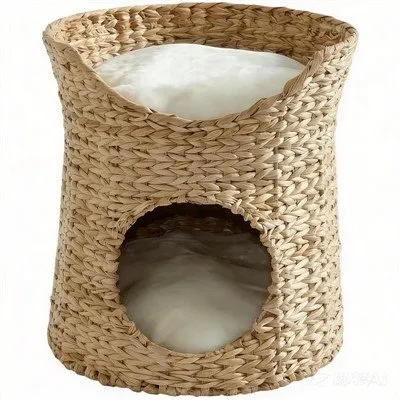
If you’re ready to order a DIY bamboo woven cat bed kit or inquire about bulk purchasing for your store, feel free to reach out to our team to discuss your needs. We’re happy to walk you through the assembly process step-by-step, answer any questions you have, and make sure you get a bed both you and your cat will love.
Cat Bed References
- American Society for the Prevention of Cruelty to Animals (ASPCA). "Safe Materials for Pet Furniture." 2022.
- Bamboo Sustainability Initiative. "Life Cycle Assessment of Bamboo vs. Traditional Wood Products." 2021.
- Journal of Feline Medicine and Surgery. "Environmental Enrichment for Indoor Cats: Preferred Resting Surfaces." 2020.
- ASTM International. "Standard Consumer Safety Specification for Pet Toys and Pet Furniture." 2019.
- Sustainable Furnishings Council. "Bamboo: A Renewable, Low-Impact Building Material for Home Goods." 2023.
Songtai(Shandong) International Trade Co., Ltd.
With abundant experience, we are one of the most professional bamboo woven cat bed manufacturers in China. Please rest assured to buy high quality bamboo woven cat bed for sale here from our factory. If you have any enquiry about customized service, please feel free to email us.
Address: 4th Floor, OCC Aode International, Linyi, Shandong, China.
E-mail: york@petduke.com
WebSite: https://www.petduke.com/
