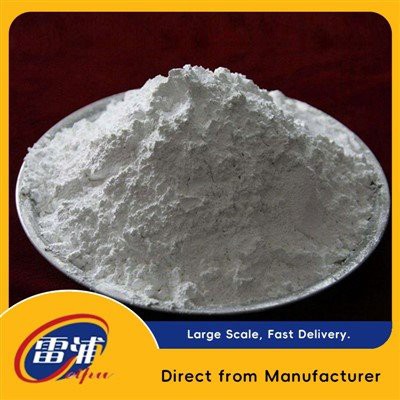
As a seasoned supplier in the high-purity alumina (HPA) market, I’ve witnessed firsthand the remarkable transformation this material has brought to the optical industry. High-purity alumina, typically defined as alumina with a purity of 99.99% (4N) or higher, possesses unique physical and chemical properties that make it an indispensable component in various optical applications. In this blog post, I will delve into the diverse uses of high-purity alumina in the optical industry and highlight why it has become the material of choice for many optical manufacturers. High-purity Alumina
Sapphire Crystal Growth
One of the most significant applications of high-purity alumina in the optical industry is in the production of sapphire crystals. Sapphire, a crystalline form of alumina, is renowned for its exceptional optical, mechanical, and thermal properties. It has a high transparency across a wide range of wavelengths, from the ultraviolet to the infrared, making it ideal for use in optical windows, lenses, and prisms.
High-purity alumina serves as the raw material for sapphire crystal growth through processes such as the Czochralski method, the heat exchanger method (HEM), or the edge-defined film-fed growth (EFG) method. The purity of the alumina is crucial in ensuring the quality and performance of the resulting sapphire crystals. Impurities in the alumina can cause defects in the crystal lattice, which can degrade the optical properties of the sapphire and reduce its suitability for high-performance applications.
Sapphire crystals produced from high-purity alumina are used in a variety of optical devices, including smartphones, watches, cameras, and lasers. In smartphones, sapphire is used as a cover glass for the camera lens and the fingerprint sensor due to its scratch resistance and high optical clarity. In laser systems, sapphire is used as a gain medium or as an optical component due to its high thermal conductivity and excellent optical properties.
Phosphor Materials
Another important application of high-purity alumina in the optical industry is in the production of phosphor materials. Phosphors are substances that emit light when excited by an external energy source, such as ultraviolet light, electrons, or X-rays. They are widely used in lighting applications, such as fluorescent lamps, light-emitting diodes (LEDs), and cathode-ray tubes (CRTs), as well as in display technologies, such as liquid crystal displays (LCDs) and plasma displays.
High-purity alumina is used as a host material for various phosphor dopants, such as rare earth metals. The alumina provides a stable crystal structure for the dopant ions, which can enhance the luminescent properties of the phosphor. The purity of the alumina is crucial in ensuring the efficiency and color quality of the phosphor. Impurities in the alumina can act as quenching centers, which can reduce the luminescence intensity and efficiency of the phosphor.
In LED lighting applications, high-purity alumina-based phosphors are used to convert the blue light emitted by the LED chip into white light. This is achieved by coating the LED chip with a layer of phosphor material, which absorbs the blue light and emits light of different wavelengths, resulting in a white light output. The use of high-purity alumina in the phosphor material can improve the color rendering index (CRI) and the luminous efficacy of the LED lighting, making it more suitable for general lighting applications.
Optical Ceramic Materials
High-purity alumina is also used in the production of optical ceramic materials. Optical ceramics are polycrystalline materials that have high transparency and excellent optical properties, similar to single crystals. They offer several advantages over single crystals, including the ability to be fabricated into complex shapes and the potential for lower production costs.
High-purity alumina is a key raw material for the production of alumina-based optical ceramics, such as translucent alumina and sapphire ceramics. Translucent alumina ceramics are used in applications where high transparency, high strength, and good chemical resistance are required, such as in high-pressure sodium lamps, infrared windows, and laser gain media. Sapphire ceramics, on the other hand, are used in applications where even higher optical performance and mechanical properties are needed, such as in aerospace and defense optical systems.
The production of optical ceramics from high-purity alumina involves a series of steps, including powder synthesis, compacting, and sintering. The purity of the alumina powder is critical in ensuring the quality and performance of the resulting ceramic. Impurities in the powder can cause scattering and absorption of light, which can reduce the transparency and optical clarity of the ceramic.
Optical Coatings
High-purity alumina is also used in the production of optical coatings. Optical coatings are thin films of materials that are applied to the surface of optical components, such as lenses, mirrors, and prisms, to enhance their optical properties. They can be used to reduce reflection, increase transmission, improve scratch resistance, and protect the optical component from environmental damage.
High-purity alumina is used as a coating material due to its high refractive index, high hardness, and good chemical stability. It can be deposited onto the surface of optical components using various techniques, such as physical vapor deposition (PVD) and chemical vapor deposition (CVD). Alumina coatings can be used to improve the antireflection properties of optical lenses, which can reduce glare and improve the clarity of the image. They can also be used to protect the surface of optical mirrors from scratching and corrosion, which can extend their使用寿命.
Why Choose Our High-Purity Alumina?
As a leading supplier of high-purity alumina, we are committed to providing our customers with the highest quality products and the best possible service. Our high-purity alumina is produced using advanced manufacturing processes and strict quality control measures to ensure its purity and consistency. We offer a wide range of high-purity alumina products, including different grades and particle sizes, to meet the diverse needs of our customers in the optical industry.

In addition to our high-quality products, we also provide technical support and customized solutions to help our customers optimize their applications. Our team of experienced engineers and scientists can work closely with you to understand your specific requirements and develop the most suitable high-purity alumina materials for your optical products.
Calcined Alumina If you are interested in learning more about our high-purity alumina products and their applications in the optical industry, or if you have any questions or inquiries, please do not hesitate to contact us. We look forward to the opportunity to work with you and to contribute to the success of your optical projects.
References
- “Sapphire: Properties, Applications, and Growth Methods.” Journal of Crystal Growth.
- “Phosphors for Lighting and Display Applications.” Advances in Luminescence Materials.
- “Optical Ceramics: Processing and Properties.” Journal of the American Ceramic Society.
- “Optical Coatings: Principles and Applications.” Thin-Film Optical Filters.
Shandong Leipu New Material Technology Co., Ltd.
With abundant experience, we are one of the most professional high-purity alumina manufacturers and suppliers in China. Please feel free to buy high quality high-purity alumina for sale here and get quotation from our factory. For price consultation, contact us.
Address: Advanced Ceramic Industry Innovation Park, No. 125, Liuquan Road, High-tech Zone, Zibo City, Shandong Province
E-mail: 2330389088@qq.com
WebSite: https://www.sdleipu.com/
