Hey there, folks! I’m an active pharmaceutical ingredient (API) supplier, and I’ve been in this game for quite a while. You might be wondering, "How do active pharmaceutical ingredients affect drug absorption?" Well, let’s dive right in and break it down in a way that’s easy to understand. Active Pharmaceutical Ingredient
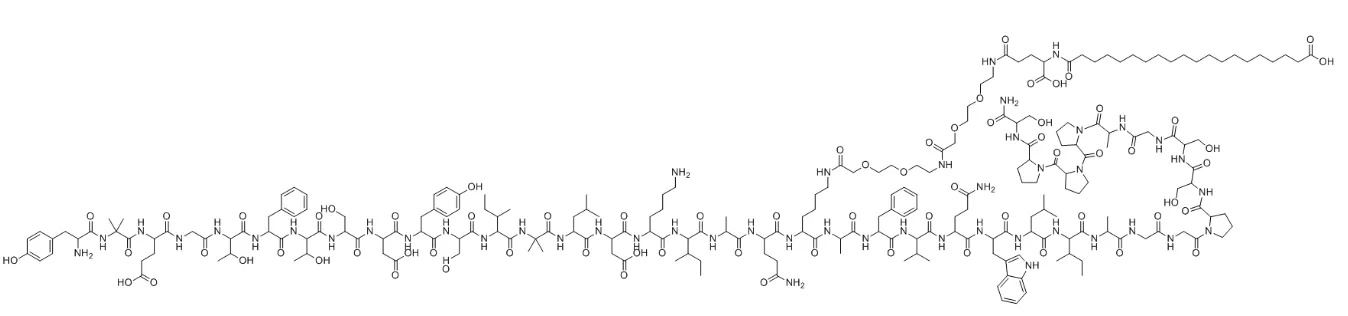
First off, what exactly are active pharmaceutical ingredients? APIs are the key components in drugs that produce the intended therapeutic effect. When we talk about drug absorption, we’re referring to how the drug gets from the site of administration into the bloodstream so it can reach the target area in the body and do its job.
One of the main factors that APIs can influence with drug absorption is solubility. Solubility is all about how well a substance can dissolve in a liquid, like the fluids in our bodies. If an API has low solubility, it can be a real pain in the neck for absorption. Think of it like trying to mix oil and water. If the API doesn’t dissolve properly, it can’t be easily absorbed by the body.
APIs with poor solubility might sit in the gut for a long time, not getting absorbed efficiently. This can lead to lower bioavailability, which means less of the drug actually makes it into the bloodstream to have an effect. For example, some drugs that treat certain skin conditions need to be absorbed through the skin. If the API in those drugs isn’t soluble in the oils or water – based substances on the skin’s surface, it won’t penetrate the skin well and won’t work as effectively.
As an API supplier, we’re constantly working on ways to improve the solubility of the ingredients we provide. We use different techniques like micronization. This involves grinding the API into really tiny particles. The smaller the particles, the more surface area there is for the substance to interact with the body’s fluids, which can improve solubility and absorption. We also use things like co – solvents, which are substances that can help another substance dissolve better.
Particle size is another big deal. You see, when it comes to APIs, size really does matter. Smaller particle sizes generally lead to better absorption. This is because smaller particles have a larger surface – area – to – volume ratio. It’s like having a bunch of small pieces of candy compared to one big piece. The small pieces are easier to dissolve and absorb.
When we supply APIs, we make sure to control the particle size as precisely as possible. We use advanced equipment to measure and adjust the particle size during the manufacturing process. This way, we can help ensure that the drugs made with our APIs are absorbed effectively.
Another aspect is the chemical properties of the API. The acidity or alkalinity (pH) of an API can have a huge impact on drug absorption. Our bodies have different pH levels in different parts. For example, the stomach is very acidic, with a pH of around 1 – 3, while the small intestine is more alkaline, with a pH of about 7 – 8.
If an API is more stable and soluble in an acidic environment, it might be better absorbed in the stomach. On the other hand, if it prefers an alkaline environment, it will likely be absorbed more effectively in the small intestine. As a supplier, we need to know these chemical properties inside out so that we can recommend the right APIs for different drug formulations.
For instance, some antibiotics are designed to be absorbed in the small intestine. We make sure that the APIs we provide for these antibiotics have the right chemical properties to dissolve and be absorbed in that alkaline environment.
There’s also the matter of the API’s interaction with other components in the drug formulation. Drugs usually aren’t just made up of the API alone. There are also excipients, which are other substances added to help with things like stability, flavoring, and drug delivery.
These excipients can either enhance or hinder the absorption of the API. Some excipients can help the API dissolve better, while others might form a barrier around the API, making it harder for the API to be absorbed. As an API supplier, we work closely with drug manufacturers to understand which excipients are being used and how they might interact with our APIs. We can then suggest the best combination to optimize drug absorption.
Now, let’s talk about the route of administration. Different ways of taking a drug, like oral, intravenous, or topical, can affect how the API is absorbed. Oral administration is the most common, but it also has its challenges. When you take a drug by mouth, it has to go through the digestive system. The acidic environment of the stomach and the enzymes in the digestive tract can break down the API before it can be fully absorbed.
As an API supplier, we need to consider these factors when formulating APIs for oral drugs. We might use enteric coatings, which are special coatings on the drug that protect the API from the stomach’s acidity and only dissolve in the more alkaline environment of the small intestine.
On the other hand, intravenous administration bypasses the digestive system altogether. The API is directly injected into the bloodstream, so absorption is almost immediate. But this route also has its own risks, like the potential for infections and adverse reactions.
Topical administration, like using a cream or lotion, is used for drugs that need to be absorbed through the skin. The API needs to be able to penetrate the skin layers, which can be a tough job because the skin acts as a barrier. We supply APIs that are formulated to be more skin – permeable, using things like liposomes or nanoparticles to help the API get through the skin.
So, as you can see, there are many ways that active pharmaceutical ingredients can affect drug absorption. And as an API supplier, we play a crucial role in making sure that the drugs we contribute to are as effective as possible.

If you’re in the business of drug manufacturing and you’re looking for high – quality APIs that are optimized for drug absorption, we’d love to hear from you. We’ve got a wide range of APIs, and our team of experts is always ready to work with you to find the best solutions for your drug formulations. Whether you need help with solubility, particle size, or chemical properties, we’ve got the knowledge and experience to assist you. Reach out to us for a friendly chat and let’s start a great partnership!
Nervous System Agents References
- Merkle, H. P., & Gander, B. (2013). Nanosuspensions for the formulation of poorly soluble drugs: I. Preparation by wet – media milling. European Journal of Pharmaceutics and Biopharmaceutics, 85(2), 733 – 740.
- Dressman, J. B., & Lennernäs, H. (2000). Dissolution testing as a prognostic tool for oral drug absorption: immediate – release dosage forms. Pharmaceutical Research, 17(10), 1186 – 1191.
- Florence, A. T. (2004). Penetration enhancers. Journal of Pharmacy and Pharmacology, 56(6), 661 – 672.
HK Neopharm Limited
HK Neopharm Limited is one of the most professional active pharmaceutical ingredient manufacturers and suppliers in China, also supports customized service. Welcome to buy high quality active pharmaceutical ingredient in stock here and get quotation from our factory. For price consultation, contact us.
Address: Room W Unit 6086/f Metro Loft 38kwai Hei St Kwai Chung, Hong Kong
E-mail: sales@hkneopharm.com
WebSite: https://www.hkneopharm.com/
