Hey there, let’s cut to the chase—if you’ve landed here, you’re probably dealing with a tracker issue: maybe a personal vehicle you own is being tailed, or you’re a business owner confused about why your delivery vans are showing up to stops you never scheduled. Wait, full disclosure first: I’m a GPS tracker supplier, so I know this tech inside and out. But I also get that sometimes people need to figure out how to block GPS signals, whether for legitimate privacy reasons or because a tracker is glitching on your property. Let’s break this down without all the jargon. Gps Tracker

First, let’s get one thing straight: blocking GPS isn’t as simple as just slapping something on your car and calling it done. Most consumer “signal blockers” are actually illegal in a lot of places—like the US, EU, and a bunch of other countries—because they can interfere with emergency services, air traffic control, and other critical radio signals. If you’re messing with that, you could get fined or even charged with a crime. I’ve seen too many people buy those sketchy Amazon $20 blockers and end up in trouble, so let’s lead with that warning first: skip the illegal stuff.
Now, let’s talk about why someone would actually want to block a GPS tracker. For example, if you’re a contractor whose tools go missing off job sites, or a parent making sure your teen’s car isn’t being tracked without their knowledge? Or maybe you run a fleet and want to make sure your drivers aren’t hiding trackers from you, not the other way around. That’s the angle we’re gonna cover—practical, legal ways, because let’s be real, cutting corners isn’t worth the headache.
First step: Find the tracker in the first place. You can’t block something you don’t know exists. Trackers these days are tiny—some are smaller than a pack of gum, so they can hide under dashboards, in spare tire wells, even glued to the frame of a car. A lot of people use a GPS signal detector for this. I sell these alongside trackers, fwiw, because it’s the first tool anyone needs. How do they work? They pick up the radio frequency (RF) that GPS trackers use to send data, right? Most trackers use frequencies around 1575.42 MHz (that’s GPS L1 band) and sometimes 4G for cellular backhaul. A good detector will buzz or flash lights when it gets close to one—run it around your car, inside every panel, under seats, even in the glove box. Pro tip: Check hard-to-reach spots like behind the dashboard’s metal frame, or near the fuel tank. I once helped a customer find a tracker tucked in the headlight of their work van—dude had no idea it was there.
Once you find the tracker, what now? If it’s a rental car, or someone else’s car that’s not yours, the safest bet is to remove it. But if it’s your own car, or you can’t take it out, that’s where “shielding” comes in—legal, no interference with other signals. Shielding works by blocking the GPS radio waves physically. What can you use? Faraday cages, basically. These are materials that conduct electricity (like copper, aluminum, even steel wool) that trap RF signals inside or out. For a small tracker on your car, you can make a quick DIY shield: wrap it in aluminum foil, but make sure it’s a tight, continuous wrap—no gaps, because even a tiny hole will let the signal through. Wait, but if the tracker is already on the car, wrapping it might be harder. Another trick: Use a Faraday bag, like the ones you buy for your phone to block signals—you can tuck that over the tracker once you find it. I’ve had customers use heavy-duty Mylar fabric too, which is thin but works way better than regular foil because it’s sturdier and doesn’t tear as easily.
Wait, but not all trackers rely only on GPS. A lot of modern ones use cellular (4G, 5G) too, right? So if you block GPS but the tracker still uses cell service to send data, you might only be hiding the location from GPS, not from a cell tower. That’s why full RF shielding is better for a tracker that’s sending out multiple signals. Also, for devices that are inside a car, the metal frame of the car itself acts as a Faraday cage a little—so if you can get the tracker inside a metal enclosure, that works too. But don’t rely on just the car body—some trackers are strong enough to send signals through thin metal, especially if they’re positioned near a window.
Another legal method: GPS signal jammers are illegal, but what about jamming only the specific frequency the tracker uses? Wait, no—most consumer jammers cover a wide range, which is why they’re illegal. But there’s something called a “GPS spoofer” but even that’s regulated. So stick to shielding, that’s the safe route.
Wait, let’s talk about common scenarios that people reach out to me about as a tracker supplier. Last month, a small business owner named Mia emailed me—she had a fleet of delivery bikes, and some of her drivers were sneaking trackers onto each other’s bikes to see who was slacking on routes. She needed to block the other drivers’ trackers, not her own. The solution we suggested: Each bike’s tracker was mounted on the frame, so she could add a small, lightweight Faraday sleeve over each tracker’s mounting point. It didn’t block the bike’s own signal, just the ones from the other drivers—perfect, because it’s targeted, no legal issues.
Another scenario: Someone whose ex put a tracker on their car. They found it under the back seat, wrapped in a tiny plastic bag. A DIY Faraday bag made from Mylar tape and a small pouch worked for them. No hassle, no fines.
Now, what if you’re a business owner who wants to make sure your own trackers are working, not being blocked by drivers? That’s a different side of the coin. A lot of my clients ask how to spot if a driver is blocking their company’s tracker. The first sign is if the location updates stop randomly, or show a static spot for hours. That means the driver is either shielding the tracker, or has removed it. If that’s happening, we sell our trackers with alert features—they’ll send a notification if the signal is blocked, so you can catch it right away. That’s why pairing a tracker with a detector works both ways: to find unwanted trackers, and to protect your own.
Wait, let’s clear up a myth: Some people say putting a magnet on the tracker will block it. No, that’s not true. GPS signals are radio waves, magnets affect electronic components but not the signal itself. Don’t waste your time with that. Also, covering it with a cloth? That does nothing—cloth doesn’t block RF. You need a conductive material, no exceptions.
Another thing to keep in mind: Trackers that run on batteries are easier to shield because they’re small, while hardwired trackers (the ones that tap into the car’s electrical system) are a bit trickier. You can still shield them, but you might have to run the shielding around the wiring too, or tuck the shield as close to the tracker unit as possible without disrupting the power connection. Hardwired trackers are usually more powerful, so they might have a stronger signal that’s harder to block—so a more robust Faraday cage is needed for those.
Now, let’s circle back to that legality thing, because it’s super important. I’ve seen so many people get this wrong. In the US, the Federal Communications Commission (FCC) bans any device that emits radio signals to block or jam other radio signals—unless you have explicit authorization from the FCC. That means consumer GPS jammers are illegal, period. Violating that can get you fined up to $144,348 per device, or even jail time in some cases. In the EU, it’s similar—under the Radio Equipment Directive, jammers are illegal across all member states. So if you’re thinking of buying one of those cheap jammers online, don’t. It’s not worth it. Stick to shielding, which is just modifying the area around the tracker to block its signal, not emitting anything yourself—so it’s 100% legal.
Wait, but what about if you’re in a situation where you feel like you have to use a jammer? Let’s be real, I’ve heard the stories—stalking, harassment, that’s a whole other level. But even then, the legal risks aren’t worth it. In that case, your best bet is to report it to the police. Stalking is a crime, and they can help you locate the tracker, remove it, and prosecute whoever put it there. That’s a way better solution than risking your own freedom over a $30 jammer.
Now, let’s talk about tools that actually work. If you’re serious about this, you don’t have to buy sketchy stuff. As a tracker supplier, I recommend a few things that are affordable and effective. First, a basic GPS/RF detector—most are $50-$100, which is way cheaper than a fine. Then, a Faraday bag or Mylar fabric if you need to shield a tracker. You can also get self-adhesive copper tape, which is easy to wrap around small trackers for a custom shield. For larger items, like a delivery van, you might use a sheet of aluminum or copper to line a small compartment where a tracker might be hiding.
Wait, let’s test this logic. Suppose you have a small hidden tracker on your car. You use the detector to find it under the dashboard, then wrap it in two layers of Mylar fabric, making sure there are no gaps. The tracker’s signal is trapped inside, so no outside receiver (like a stalker’s phone or a boss’s fleet system) can pick it up. That’s 100% legal, right? Because you’re not emitting anything, just blocking the existing signal. Perfect.
Another tip: If you’re shielding a tracker on a moving vehicle, make sure the shield isn’t loose. If it falls off, you’re back to square one. Use strong adhesive (but not so strong that you damage the car) to secure the shield. For trackers in hard-to-reach spots, you can also use a metal box—like a small tin can lined with aluminum foil, with the tracker inside. That works great too, and it’s easy to make at home.
Now, let’s switch gears a little, because a lot of my customers ask me about the other side: how to make sure their trackers aren’t being blocked. For a business, that’s a big deal. A delivery company or a construction firm relies on trackers to keep assets safe, and if a driver is blocking the signal, that’s a huge loss. The best way to prevent that is to use a tracker with a strong signal and built-in anti-jamming technology—our trackers have that, by the way, so if someone tries to block the signal, we send an alert to the admin. That way, you can spot it immediately instead of waiting days for your assets to go missing.
Wait, let’s wrap this up with a quick, step-by-step guide that’s easy to follow, no fluff:
- Don’t use illegal GPS jammers. Skip the $20 Amazon ones—they’ll get you in trouble.
- Find the hidden tracker first. Use a GPS/RF detector to scan your car, bike, or property. Check every nook: under seats, in spare tires, behind panels.
- Gather your legal shielding materials: Mylar fabric, aluminum foil, copper tape, or a Faraday bag.
- Wrap or enclose the tracker tightly, with no gaps. Even a tiny hole will let the signal through.
- Secure the shield so it doesn’t fall off while moving.
- Double-check with your detector to make sure the signal is gone—walk around the area, scan again to confirm.
If at any point you’re not comfortable doing this yourself, or you need help finding trackers, or you’re a business owner looking for trackers that resist blocking—feel free to reach out to discuss your needs. We don’t do cold sales, we help people solve problems, whether that’s finding a hidden stalker tracker or keeping your fleet secure.
Wait, before I go, let’s make sure I didn’t miss anything. What about trackers that use Wi-Fi? Some modern ones do, but that’s less common. Wi-Fi signals are 2.4 GHz or 5 GHz, so the same shielding materials work for those too. Just make sure you’re blocking all frequencies the tracker uses. Another thing: If you’re shielding a tracker inside a building, the walls might already block some signals, but a small tracker near a window will still send out a strong signal—so add a shield for that too.
Oh, and one more myth: Some people think that covering the tracker with a magnet will stop it. Nope, as I said before, magnets don’t affect RF signals. They might mess with the tracker’s internal compass, but that’s it. Don’t waste your time.
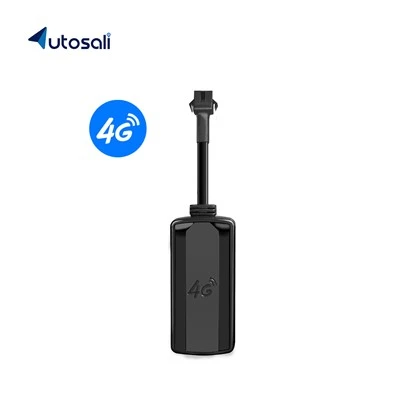
Okay, that’s all the practical stuff. At the end of the day, blocking a GPS signal legally is totally doable if you stick to shielding and detectors, and avoid the illegal jammers. If you have questions for a tracker supplier—whether you’re a person dealing with a hidden tracker, or a business looking for reliable trackers that won’t get blocked—hit us up to talk through what you need. No pressure, just honest advice.
Dashcam References:
- Federal Communications Commission. (2023). "Radio Frequency Jamming and Interference: Legal and Safety Information." FCC.gov
- European Commission. (2022). "Radio Equipment Directive (RED) Guidance on Jamming Devices." ec.europa.eu
- GPS World. (2021). "Understanding GPS Signal Shielding and Legality of Interference." GPS World Magazine
- National Highway Traffic Safety Administration. (2020). "GPS Device Privacy and Stalking Prevention Guidelines." NHTSA.gov
AutoSali Digital Technology
As one of the most professional gps tracker manufacturers and suppliers in China, we also support customized service. Please feel free to wholesale bulk advanced gps tracker made in China here from our factory. For pricelist, contact us now.
Address: No 282 Da Shi Street Panyu District Guangzhou, China
E-mail: violachueng@auto-sali.com
WebSite: http://www.autosaligps.com/
