If you’ve ever stood under a midday sun and watched your solar panels hum along quietly, you’ve probably wondered—are the ones on my roof made of the same stuff as the ones powering that community farm down the road? When I started out as a monocrystalline solar panels supplier back in 2015, I fielded this exact question at least a dozen times a week. Most people come to me thinking “solar is solar,” and while that’s true at a high level, the difference between monocrystalline and thin-film solar panels is way more than just a tiny detail—it’s the stuff that decides how much money you save, how much space you need on your roof, and whether your investment pays off in five years or fifteen. Today, I want to break this down like I do with my small-town neighbors who are thinking about going solar for their homes or farms, no fancy jargon, just real talk. Monocrystalline Solar Panels

Let’s start with the basics of how solar panels work, because that’s where the core difference lives. Every solar panel is made of photovoltaic (PV) cells, right? Those little wafers that gobble up sunlight and turn it into electricity. The way those cells are built is where monocrystalline and thin-film part ways. Monocrystalline cells, as the name hints, are cut from a single, pure crystal of silicon—think of a big, seamless ingot that’s grown in a lab over days, not weeks. Thin-film, on the other hand, is made by depositing extremely thin layers of PV material (often silicon, but sometimes cadmium telluride or copper indium gallium selenide) onto a cheap substrate like glass, metal, or even plastic. No single crystal, no big ingot—just a thin, flexible sheet of material. That might sound like a trivial difference, but it ripples out to every part of how the panel performs.
First, performance, and that’s the make-or-break for most people. I’ve had customers come in with a 1,200-square-foot roof, and their top priority is getting as much power as possible without having to knock down trees or expand the patio. Monocrystalline panels have a efficiency rating that usually lands between 20% and 22% these days—some of our top models hit 23% on a good day. Efficiency means how much sunlight that hits the panel turns into usable electricity. Thin-film? Their efficiency is much lower, usually between 15% and 18%, and it can drop even more if the weather’s overcast or the panel gets a little hot. Last year, a dairy farmer I supply panels to told me he tried a small thin-film array on his barn roof to test it out, and he was only getting half the power he expected because his roof is shaded most of the morning. Monocrystalline’s better at converting low light, too—if you live in a place like the Pacific Northwest where gray days are the norm, that extra 5% to 7% efficiency adds up month after month.
Then there’s space, which ties directly back to efficiency. If you need to power a 2,000-square-foot home, let’s do quick math. A typical monocrystalline panel is around 65 inches by 39 inches, and at 22% efficiency, one panel makes roughly 350 watts. To power a home that uses 10,000 kWh a year, you’d need about 28 panels, which would fit on a 1,800-square-foot roof with no obstructions. Thin-film panels are larger for the same wattage—they’re often 70 inches by 40 inches, and at 16% efficiency, a panel only makes about 250 watts. To get that same 10,000 kWh, you’d need 40 panels, which takes up almost 2,500 square feet. That’s a whole extra bedroom’s worth of roof space you’d have to sacrifice, not to mention the extra hardware to mount all those larger panels. I’ve had homeowners with small roofs tell me they ruled out thin-film immediately after seeing the space numbers—they couldn’t afford to give up that much outdoor space for a lower output.
Durability is another big one, and it’s something I’ve seen play out over the years with my own installations. Monocrystalline panels are built with that single silicon crystal, which is much more stable than the layered material in thin-film. They have a longer lifespan, too—most come with a 25-year performance warranty, meaning they’ll still be making at least 80% of their original power after 25 years. Thin-film warranties are usually 10 to 15 years, and their performance drops off faster over time. I remember a customer in Texas who put thin-film on his garage in 2010; by 2020, he was getting 30% less power than when he installed them, while the monocrystalline panels on his main roof still were at 90% of their original output. Monocrystalline also hold up better to extreme weather: hailstorms, high winds, even heavy snow load. Thin-film is more flexible, which can be an upside for some, but it’s also more prone to scratching or damage from debris, especially if it’s mounted on a sloped roof where snow slides off fast.
Cost is probably the question I get asked most, and it’s where a lot of people get tripped up. On a per-watt basis, monocrystalline is more expensive upfront than thin-film. Right now, monocrystalline runs about $0.15 to $0.20 per watt, while thin-film is around $0.10 to $0.15 per watt. That might sound like thin-film is the better deal, but you have to look at the total cost, not just the sticker price. Let’s go back to that 10,000 kWh home: monocrystalline would cost about $4,200 for the panels, while thin-film would be $4,000 at first glance. But remember, you need more thin-film panels, so you’re paying for extra mounting hardware, extra labor to install more panels, and if your roof is small, you might have to add panels to the garage or even invest in battery storage earlier because you’re not generating enough power on your main roof. Over 25 years, the total cost of ownership for monocrystalline is 20% to 30% lower, because you’re generating more power per dollar upfront. I always tell customers: if you have the roof space, monocrystalline is the long-term win. If you have a huge, open field and need to power a remote farm or a portable solar setup where you can move the panels, thin-film might make sense.
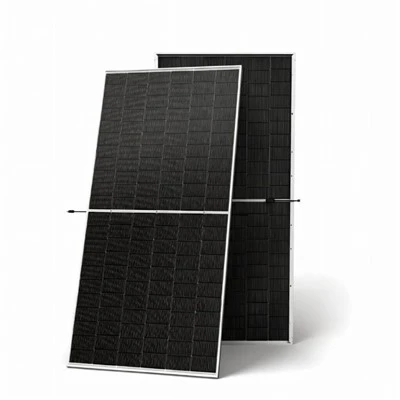
Style is a smaller point, but it matters to a lot of homeowners. Monocrystalline panels are that sleek, dark black color everyone associates with solar—they look good on a roof, don’t stick out like a sore thumb, and even increase your home’s resale value. Thin-film panels are usually blue or a dull gray, and some can be a little bulkier, so they stand out more. I’ve had real estate agents tell me that homes with monocrystalline solar panels sell faster and for more money, because buyers know they’re getting a reliable, high-efficiency system that will save them money for decades.
Wait, but let’s not pretend thin-film has no place. It’s not all bad. Thin-film is lightweight and flexible, so it’s perfect for things like portable solar chargers, RVs, or even large-scale solar farms where space is abundant and upfront cost is the top priority. Some of the biggest solar farms in the country use thin-film panels because they can cover huge areas cheaply, and even with lower efficiency, the scale makes up for it. But for residential and small commercial installs, which is where most of my business is, monocrystalline is the better choice for most people.
Over the past eight years as a monocrystalline solar panels supplier, I’ve seen a lot of customers come in with preconceived notions from online reviews or their neighbor’s recommendation. Last year, a retired teacher from Iowa came to me after a friend swore by thin-film panels, but he had a 1,500-square-foot roof and was worried about getting enough power. I ran the numbers for him: with monocrystalline, he could power his entire home, including his electric car, on his roof. With thin-film, he’d need to add panels to his tool shed, which would cost more in the long run. He went with monocrystalline, and six months later he sent me a photo of his electric bill—cut from $180 a month to $12, and he’s already saving enough to cover the monthly payment on the panels. That’s the kind of win that makes this job worth it.
I don’t push monocrystalline on everyone, though. If someone has a 10-acre field and wants to set up a solar array to power their business, I’ll tell them to look at thin-film. If someone needs a portable panel for camping, thin-film’s flexibility is unbeatable. But for anyone looking to install solar permanently on their home, small business, or farm, monocrystalline is almost always the better investment. It’s higher efficiency, longer lifespan, better durability, and lower total cost over time—those are the numbers that don’t lie.
At the end of the day, the difference between monocrystalline and thin-film isn’t about one being “good” and the other being “bad.” It’s about matching the panel type to your specific needs. I’ve had customers go with thin-film and be happy with their choice, and I’ve had customers go with monocrystalline and tell me it was the best decision they ever made. The key is doing your research, talking to a supplier who will be honest with you (not just push the most expensive product), and thinking about the long term, not just the upfront sticker price.
If you’re thinking about going solar, whether it’s for your home, farm, or small business, I’m here to help. I’ve worked with hundreds of customers over the years to design solar systems that fit their budget and their space, and I only sell high-quality monocrystalline panels that I stand behind. Don’t hesitate to reach out to discuss your project, ask questions, or get a free quote—there’s no pressure, just honest advice from someone who’s been in this business long enough to know what works.
Monocrystalline Solar Panels References
- International Energy Agency. (2023). Solar Photovoltaic Roadmap: Technology, Supply Chains, and Deployment Pathways.
- Solar Energy Industries Association. (2022). U.S. Solar Market Insight Report.
- National Renewable Energy Laboratory. (2021). Performance and Durability of Crystalline Silicon and Thin-Film Photovoltaic Modules.
- IRENA. (2023). Renewable Power Generation Costs in 2022.
Dongguan MylAn International Trade Co., Ltd.
As one of the most professional monocrystalline solar panels manufacturers and suppliers in China, we’re featured by quality products and good price. Please rest assured to buy advanced monocrystalline solar panels in stock here from our factory. Welcome to contact us for pricelist.
Address: Room 401, Building 5, No.7, Machong Section, Shuixiang Avenue, Machong Town, Dongguan City, Guangdong Province
E-mail: salee@mylansolar.com
WebSite: https://www.mylansolar.com/
