As someone who’s worked in air compressor parts for nearly a decade, I’ve stood in front of dozens of workshop managers, small business owners, and even DIY enthusiasts staring at a rusty, dented safety relief valve, asking the same question: “When do I replace this thing?” Air Compressor Parts

It’s not a trivial question. That little valve on your air compressor isn’t just a random add-on—it’s your system’s last line of defense against catastrophic failure. I’ve seen what happens when a safety relief valve (SRV) fails: a 60-gallon air compressor tank rupturing, sending shrapnel through a warehouse wall, or a shop floor worker knocked unconscious from a flying valve cap. Those aren’t hypothetical stories; they’re from job sites I’ve visited to replace failed parts. The good news is you don’t have to wait for a disaster to act. Let’s break down exactly when you should replace your SRV, backed by industry standards I see every day as a parts supplier.
First, let’s start with the basics: what even is a safety relief valve, and why does it matter for your compressor? Every air compressor builds up pressure as it compresses air, which is then stored in the receiver tank. If that pressure exceeds the tank’s maximum allowable working pressure (MAWP)—that number stamped on the side of your tank, usually 100, 125, or 150 PSI—the tank can rupture. The SRV’s sole job is to open automatically when pressure climbs 10% above the MAWP (that’s the industry standard set by OSHA and ASME, by the way) to release excess air and bring pressure back down. It’s a fail-safe, not a maintenance part, but that doesn’t mean it’s indestructible.
The first big red flag: age. Even if your valve looks brand new, ASME Code requires that safety relief valves be replaced every 5 to 10 years, depending on their type and how often your compressor runs. Wait, that’s a big window—so why such a range? If your compressor runs 24/7 at a job site like a construction yard or manufacturing plant, you’re looking at replacing the SRV every 5 years, maybe sooner. That constant heat and pressure cycle wears out the spring inside the valve, which is what holds it closed until it needs to open. I recently serviced a food processing plant’s compressors, and their maintenance manager told me they replaced their SRVs every 6 years, and half the old ones failed to open during a pressure test. On the flip side, if you have a small shop compressor that runs only a few hours a day, or a hobbyist unit in a garage that gets used once a week, you can stretch that timeline to 10 years. But here’s the mistake I see all the time: people ignore the age entirely, assuming if it works now, it’ll work next year. That’s like never changing your car’s oil because it runs fine today.
Next, visual and physical signs that mean replacement can’t wait. You don’t need a pressure gauge to spot these—any competent technician, or even a careful owner, can check them during a routine compressor inspection. First, signs of corrosion. The SRV is usually made of brass or steel, and if you see rust, pitting, or flaky corrosion on the valve body or the spring, that’s a problem. Corrosion weakens the valve’s ability to hold pressure closed. Last year, a HVAC contractor brought in a rusted SRV he’d pulled from a 80-gallon compressor; when we tested it, it didn’t open at all until we hit 180 PSI—way above the MAWP. That tank was days away from a failure. Another visual red flag: leaks. If your valve is leaking air when the compressor is off, or even when it’s at operating pressure, that’s a sign the seal is worn out. A small leak might seem harmless, but it’s a sign the valve’s internal components are degraded. What if it’s not leaking, but it’s also not opening when you test it? That’s another big one. OSHA requires you to test your SRV annually by manually lifting the valve lever (that little arm on top, usually) to make sure it releases pressure. If you lift the lever and nothing happens, or it sticks halfway, that valve is done. Don’t try to “fix” it by tapping it or spraying WD-40—WD-40 is a solvent that can break down the rubber seals inside, and tapping won’t fix a worn spring or corroded valve seat.
Then there’s the issue of non-compliance with regulations, which is a big one for businesses. OSHA’s Process Safety Management standard and ASME Boiler and Pressure Vessel Code both mandate that safety relief valves on pressure vessels (which your air compressor tank is) are properly maintained and replaced when they no longer meet specification. I’ve had small business owners come to me panicking because OSHA inspectors shut down their operations after finding an expired SRV. The fines aren’t cheap—OSHA can issue serious violations up to $13,653 per violation, and willful violations go way higher. Even if you’re a hobbyist, do you really want to risk a tank exploding because you skipped replacing a $20 part? I see customers all the time trying to save money by reusing old valves, but the cost of replacing an SRV is nothing compared to the cost of property damage, medical bills, or downtime from a shutdown.
Wait, what about rebuild kits? A lot of people ask me, “Can I just rebuild my SRV instead of replacing it?” That’s a common question, and the short answer is: sometimes, but not always. If the valve is less than 5 years old, shows only minor wear, and passes a pressure test, a rebuild kit might work. But if it’s over 5 years old, has corrosion, or has failed a pressure test, a rebuild is just a temporary fix. Rebuild kits don’t fix worn springs or corroded valve bodies, which are the main causes of SRV failure. Last year, a woodworking shop owner bought a rebuild kit for his 7-year-old SRV; two weeks later, the valve failed to open during a pressure spike, and his tank ruptured, taking out a section of his workbench. He told me he’d saved $15 on a rebuild instead of buying a new valve, and now he’s out $10,000 in damage. That’s a trade-off no one should make.
Another scenario: if you modify your air compressor or your operating pressure changes. If you recently upgraded your compressor to produce higher pressure, or you changed your tank’s MAWP (which you shouldn’t do without professional approval), your existing SRV is no longer rated for the new pressure. For example, if your old SRV was rated for 125 PSI and you now run your compressor at 150 PSI, that valve will open too late, if at all. That’s a critical replacement—you can’t reuse a valve rated for a lower pressure on a higher-pressure system. I also see this with people who add accessories like air tools that require more pressure, and they crank the compressor’s pressure switch up without updating the SRV. That’s a dangerous game.
How do you actually test your SRV to know if it needs replacement? Let’s walk through the correct annual test, which I teach to every customer who buys an SRV from me. First, make sure the compressor is turned off and locked out (for safety, no one should work on a pressurized tank). Drain all the air from the tank until the pressure is zero. Then, close the drain valve and restart the compressor, letting it build up pressure. Watch the pressure gauge—when the pressure reaches 10% above your tank’s MAWP (so if your MAWP is 125 PSI, that’s 137.5 PSI), the SRV should pop open and release air. If it doesn’t open until pressure hits 150 PSI or more, that valve is bad and needs to be replaced. Also, when the pressure drops back down, the valve should close smoothly, not leak. If it stays open or leaks after pressure drops, that’s another sign of wear.
Now, let’s talk about how to choose the right replacement SRV, since that’s part of the process too. As a parts supplier, I can’t tell you how many people come in with the wrong valve: they bring a valve that’s too small, made of the wrong material, or not rated for their tank’s MAWP. When you replace your SRV, you need three things: first, a valve with the same inlet size as your old one (usually 1/2 inch or 3/4 inch for most residential and small commercial compressors), second, a valve rated for at least 110% of your tank’s MAWP (so if your tank is 125 PSI, get a valve rated for 137.5 PSI minimum, or a standard 150 PSI valve which is common), and third, a valve made of the right material for your environment. If you’re in a humid environment, or use your compressor in a dusty, dirty workshop, go for a brass valve, which is more corrosion-resistant. If you’re in a marine environment or use your compressor with chemicals, you might need a stainless steel valve, but for most people, brass works just fine.
I know replacing a part that “sits there and does nothing” can feel unnecessary, but think of it like a smoke detector in your home. You don’t test it every year because it’s fun—you test it because if it fails when you need it, the consequences are devastating. That’s exactly what an SRV is for your air compressor. I’ve seen too many close calls, and far too many preventable accidents, because someone waited too long to replace their safety relief valve.
So to wrap this up, the clear signals to replace your SRV are: it’s 5 to 10 years old (replace every 5 years if it runs constantly, 10 if it’s a low-use unit), it shows signs of corrosion, leaks, or physical damage, it fails to open when tested, it’s non-compliant with OSHA or ASME standards, or you’ve modified your compressor’s operating pressure. Don’t risk cutting corners here.
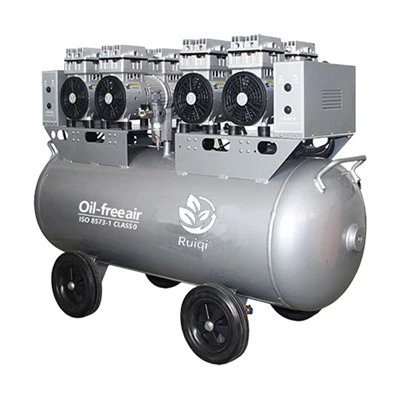
If you’re due for a replacement, or you’re not sure if your current SRV is up to code, reach out to us to discuss your needs. We can help you pick the right valve for your compressor, whether it’s a small residential unit or a large industrial system, and answer any questions you have about installation or testing. Don’t wait until it’s too late—your safety, and your equipment, are worth the small investment in a new safety relief valve.
Air Treatment Equipment References
OSHA. (2023). Pressure Vessel Safety: Safety Relief Valves. Occupational Safety and Health Administration.
ASME. (2022). Boiler and Pressure Vessel Code, Section VIII: Pressure Vessels. American Society of Mechanical Engineers.
Compressed Air and Gas Institute. (2021). Maintenance Guidelines for Air Compressor Safety Relief Valves. Compressed Air and Gas Industry Association.
Suzhou Ruiqi Intelligent Equipment Co., Ltd.
As one of the most professional air compressor parts manufacturers and suppliers in China, we also support custom service. As we have world-leading production equipment and strong manufacturing capabilities, we warmly welcome you to buy high quality air compressor parts made in China here from our factory. Contact us for pricelist.
Address: No. 1729, Zhongshan South Road, Wujiang District, Suzhou City, Jiangsu Province, China, 16th Floor
E-mail: wts476626494@126.com
WebSite: https://www.ruiqicomp.com/
