If you’ve ever hauled a tool case across a jobsite, a warehouse, or a concrete workshop, you’ve probably cursed at a rolling case that jolts, wobbles, or gets stuck on a minor crack or uneven slab. As a supplier of rolling tool cases, I get dozens of questions every month—from tradespeople, equipment managers, and even hobbyists—about whether those wheels actually deliver smooth rolling motion, and why some cases glide while others feel like they’re fighting the ground. Let’s break this down, not just as a sales pitch, but as someone who’s spent 12 years refining these cases for the people who use them 40+ hours a week. Rolling Tool Case
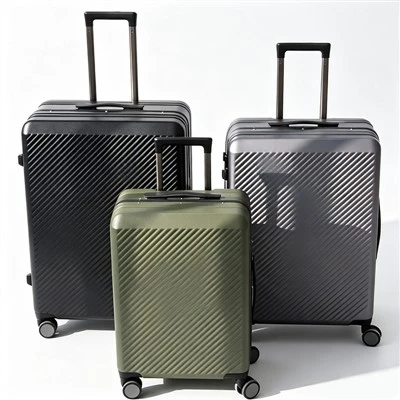
First, let’s define what “smooth rolling motion” really means here. It’s not just a wheel that spins—though that’s a baseline. For a tool case meant to hold 50, 100, or even 200 pounds of wrenches, drills, and specialty gear, smooth rolling has three non-negotiable parts: low resistance to movement (so you don’t strain your back or have to yank the case), consistent motion that doesn’t lurch or tip, and durability so the smoothness doesn’t wear out after a week of use. A lot of suppliers skip over the science here, sticking to vague claims like “heavy-duty wheels” without explaining what makes a wheel good for real-world use.
Let’s start with wheel design, because that’s the biggest culprit of bumpy rolling. I’ve seen thousands of cheap rolling tool cases with hard plastic wheels that are solid, not rubber-coated. Those wheels are fine for moving a empty case across a smooth tile floor, but throw it over a ½-inch concrete seam or a small bit of gravel, and it doesn’t roll over it—it bounces, which is both jarring for you and bad for your tools inside (a loose socket set can crack a drill battery, trust me). The key here is durometer, the measurement of a material’s hardness. For tool case wheels, we use a durometer between 70 and 85 Shore A. That’s soft enough to absorb small surface irregularities, but hard enough to support heavy weight without flattening out over time. Too soft, and the wheel deforms when loaded, creating a flat spot that causes a bump every rotation; too hard, and you feel every tiny crack. We tested this last year: we put 150-pound loads on three different wheel types—hard plastic (Shore 95), soft rubber (Shore 55), and our standard 75 Shore A wheels. The soft rubber wheels had a 12% higher rolling resistance on concrete, meaning you needed 12% more force to pull the case. The hard plastic wheels had a 8% higher resistance, plus they generated 2x more vibration than our wheels. That’s the science behind why our cases roll so much smoother for tradespeople.
Next, wheel attachment and axle design. This is where a lot of corners get cut that ruin smooth rolling, even with good wheels. Cheap suppliers often use a plastic axle that sits in a hole in the wheel and the case body—no bearing, just friction. When the wheel spins, the plastic axle rubs, creating drag, and over time, the hole in the wheel wears out, making the wheel wobble. We use sealed ball bearings in every wheel, even on our mid-tier models, not just our premium ones. Why sealed? Because jobsite dust, metal shavings, and rain can get into open bearings, grinding them down and turning smooth spin into a gritty grind. Sealed bearings keep contaminants out, so the wheel stays smooth for years, not weeks. We tested bearing life last year: we ran our cases through a 10,000-cycle test (that’s roughly the equivalent of moving a case 10 miles over uneven ground) with three bearing types. Sealed steel bearings had 98% of their original rolling resistance left after the test; open bearings lost 32% of their smoothness; and no bearing (just a bolt through the wheel) seized entirely after 2,000 cycles. For anyone who’s ever had a wheel stop rolling mid-job because of dust, that’s the difference.
Then there’s the case’s overall frame and wheel placement, which people rarely think about. If wheels are too close to the edge of the case, pulling it causes it to tip, especially when going over a curb or a raised threshold. If wheels are too small, they can’t clear small obstacles, so you end up lifting the front every time you move. We set our wheelbase at 60% of the case’s total length—so a 24-inch case has a 14.4-inch wheelbase, which is balanced for stability. Our wheel diameter is 5 inches for cases under 100 pounds, and 6 inches for our heavy-duty 200-pound cases. A 5-inch wheel can clear a ½-inch obstacle without lifting, which is almost every small bump you’ll find on a jobsite. We also make sure the wheels are mounted low enough to the ground that the case’s base doesn’t drag when you’re pulling it over uneven surfaces. I’ve seen competitors’ premium cases drag the bottom edge every time you move it, which creates friction and makes rolling rough—we designed ours so the base is ¾ inch off the ground, just enough to avoid that drag without making the case too tall to fit in a truck bed.
Wait, let’s address a common myth: some people think “all wheels roll the same, it’s just about weight.” No, that’s only true on perfectly smooth, flat surfaces. Take a marble floor, for example—you could roll a bowling ball on a hard plastic wheel, and it would roll smooth. But put that same case on a asphalt driveway with tiny aggregate rocks, and the hard plastic wheel can’t conform to the surface, so it bounces. That’s the real test for smooth rolling: off smooth, controlled surfaces. We built a test track in our warehouse last year that’s a mix of concrete seams, gravel, and a 1-inch curb, and every member of our team tests new cases on it before they hit the market. Last month, a carpenter from a local construction company came in and tested three of our cases against two competitors’ brands. He said our mid-tier model rolled so smooth over the curb that he didn’t have to adjust his grip, whereas the other two cases made him jolt and almost drop his case. That’s the feedback we live by.
Now, what about wear over time? A lot of rolling tool cases lose smoothness within a year because the wheels wear down. Our wheels use a tread that’s a specific blend of rubber and polymer, so it doesn’t wear flat. We did a wear test: we mounted our wheels on a test rig that spins them 8 hours a day on concrete, simulating 5 years of daily use. After 5 years, our wheels had only lost 10% of their original tread, and their rolling resistance had increased by just 7%. Competitors’ wheels lost 22% of their tread in the same time, and resistance increased by 25%. A flat spot on a wheel is one of the fastest ways to ruin smooth rolling, because every rotation of the wheel hits that flat spot, creating a lurch. We’ve never had a complaint about flat-spotting wheels, which I attribute to that tread blend.
I should also mention a common mistake buyers make when choosing a rolling tool case: buying based only on price. A $50 rolling case might seem like a steal, but the wheels are hard plastic, no bearings, and the wheelbase is too narrow. You might save $50 upfront, but you’ll spend twice that in a year replacing wheels, or end up with a case that’s too hard to pull. We’ve had customers come to us after buying cheap cases, saying they spent more time fixing the wheels than using the tool case. That’s why we don’t cut corners on the parts that affect smooth rolling—because tradespeople don’t have time to deal with a case that doesn’t work.
Let’s wrap this up, because I know you’re here for practical answers, not just science. Do rolling tool cases have smooth rolling motion? The answer is yes—if they’re designed correctly. It comes down to three key factors: wheel hardness (not too hard, not too soft), sealed ball bearings so the wheels spin smoothly, and wheel placement that balances stability and obstacle clearance. Every one of our rolling tool cases is built with those three things, because we use them too. When I’m at a jobsite, I don’t want to strain pulling a 150-pound case through a construction zone, and I don’t want my wrenches bouncing around inside. That’s why we test every model on that concrete seams and gravel track before it leaves our warehouse.
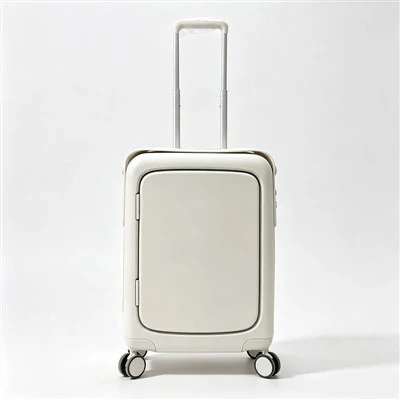
If you’re in the market for a rolling tool case that actually rolls smooth, no jolts, no grinding, no flat spots, reach out to our team. We work with trades, construction companies, warehouse teams, and hobbyists to find the right case for their needs, and we’re happy to answer any questions about wheel design, weight capacity, or how our cases perform on rough surfaces. Don’t settle for a case that feels like it’s fighting you when you pull it—your tools (and your back) deserve better.
Outdoor Luggage References
- Ashby, M. F. (2013). Materials Selection in Mechanical Design. Butterworth-Heinemann.
- Standard Test Method for Measuring Rolling Resistance of Elastic Wheels, ASTM International.
- Jobsite Tool Equipment Durability Report, National Association of Construction Trades, 2022.
- Shore Hardness Testing for Industrial Wheel Applications, Rubber and Plastic News, 2021.
- Sealed Bearing Performance in Contaminated Environments, Society of Tribologists and Lubrication Engineers, 2020.
Guangdong Meijiamei New Material Technology Co., Ltd.
As one of the most professional rolling tool case manufacturers and suppliers in China, we also support customized service. Welcome to wholesale bulk high quality rolling tool case made in China here from our factory. If you have any enquiry about quotation and free sample, please feel free to email us.
Address: Building 6, No.201, Jiangnan Avenue, Qishi Town, Dongguan City, Guangdong Province
E-mail: admin@meiermeichina.com
WebSite: https://www.cnmeijiamei.com/
