If you’ve ever stood on a drilling job site, watching a crew thread a length of non-magnetic drill rod into the top of a drill string before lowering it into a borehole, you might wonder: how does this stuff hold up when all that weight and force is pushing down on it? Most drill operators know that non-magnetic rods aren’t just for showing off specialized gear labels—they’re engineered for specific jobs where magnetic interference would throw surveys or well data off, but their compression strength is make-or-break for whether a hole gets drilled at all, or if you’re pulling broken steel out of the hole two days in. As a supplier who’s worked with drilling crews across gold exploration, geotechnical surveys, and water well projects for 12 years, I’ve answered this question so many times that I’ve stopped giving generic textbook answers. Let’s break down what compression strength actually means for non-magnetic drill rods, how it differs from standard steel drill rods, and what you need to know to pick the right rod for your job. Non-Magnetic Drill Rods
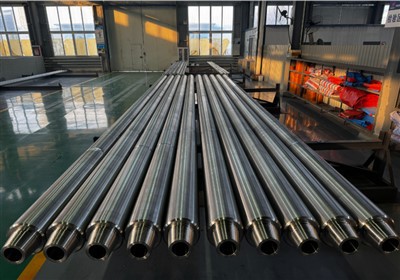
First, let’s get one thing straight: compression strength for drill rods isn’t a single number you can pull off a spec sheet and call it a day. For standard carbon steel drill rods, compression strength is often quoted as a flat ultimate limit, but non-magnetic rods aren’t made from plain carbon steel—they’re usually austenitic stainless steel, sometimes alloyed with elements like manganese, nickel, and chromium, or even high-performance non-magnetic composites for very specialized use. That material makeup is why they don’t mess with magnetometers or electromagnetic survey tools, but it also changes how they respond to compressive force. The core of compression strength here is the amount of axial force a rod can take before it either bends permanently (that’s yield compression strength) or snaps entirely (ultimate compression strength). For drill rods, yield strength is actually more important than ultimate, because a bent rod in a hole isn’t just useless—it can wedge, snap, or damage the borehole wall so bad you have to case it later, adding thousands of dollars to a project.
Over the years, I’ve seen two big myths about non-magnetic rod compression strength that keep showing up on job sites. The first is that all non-magnetic rods are weaker than standard steel. That’s only true if you buy cheap, off-spec rods from a supplier cutting corners on alloy content. The second is that compression strength is the only thing that matters when drilling. Spoiler: it’s not, but it’s non-negotiable for deep holes or hard rock applications. Let’s get into the actual numbers I see on our shop floor and from field feedback. For standard austenitic non-magnetic drill rods, the yield compression strength ranges from around 310 MPa (45,000 psi) for small, 1.5-inch diameter rods up to 550 MPa (80,000 psi) for the larger 4.5-inch rods we use for deep exploration holes. Ultimate compression strength runs about 10-15% higher than that, so between 345 MPa (50,000 psi) and 620 MPa (90,000 psi) depending on size and alloy. Compare that to common carbon steel drill rods, which have yield strengths around 415 MPa (60,000 psi) to 550 MPa (80,000 psi) for the same diameters—so the gap isn’t as big as a lot of old-school drillers think, if you’re working with quality non-magnetic rod.
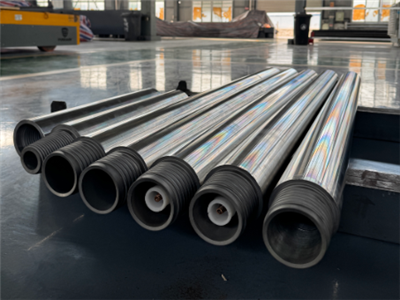
But wait, there’s a catch. Compression strength isn’t just about the metal’s properties. The design of the rod itself plays a huge role, especially the joint—those threaded ends that connect one rod to the next. I can’t tell you how many times a driller has come back with a broken rod joint and said “the rod was weak” when the truth was they used a cheap rod with a thin-walled joint that couldn’t handle the compression force. Non-magnetic rods use different thread forms than standard steel rods sometimes—API threads, modified buttress threads, or our proprietary tapered precision threads to keep compression forces evenly distributed across the joint. A few years back, we had a drilling crew in Northern Ontario working on a 1,200-meter gold exploration hole. They’d been using a competitor’s non-magnetic rods, and every 200 meters they were breaking joints. They switched to our premium grade non-magnetic rods, and they drilled the full 1,200 meters without a single joint failure. The compression strength of the rod body was identical to the competitor’s, but the joint was engineered to handle the load. That’s the difference between a rod that’s spec’d on paper and one that works in the field.
Another factor that surprises a lot of new users: dynamic compression vs static compression. Static compression is the steady, constant force you get when drilling soft rock or pushing a string down into a shallow hole. Dynamic compression is the repeated, hammer-like force from a drilling rig’s rotary table or hammer action, especially in percussive drilling. Non-magnetic rods handle static compression really well—their austenitic alloy is ductile, so it bends slightly instead of snapping under steady force, which is good for absorbing minor vibrations. But dynamic compression? That’s where cheap non-magnetic rods fall apart. The alloy is porous or has inconsistent grain structure, so it fatigues quickly under repeated impact. We had a water well drilling crew in Texas last year doing a 500-meter hole in hard limestone with a down-the-hole hammer. They used low-cost non-magnetic rods from a overseas supplier, and after 300 meters, half the rods in the string had hairline cracks from dynamic compression fatigue. They switched to our high-impact non-magnetic rods, which have a finer grain structure, and they finished the hole without a single crack. Dynamic compression strength is a separate specification that most new buyers don’t even know to ask for, and it’s one of the biggest causes of early rod failure.
I also get asked a lot about non-magnetic composite drill rods, which are growing in popularity for shallow geotechnical projects. These rods are made from carbon fiber reinforced polymer, and their compression strength is lower than metal non-magnetic rods—usually around 200-250 MPa (29,000-36,000 psi) yield strength. But they’re lighter, which is a big plus when you’re handling a lot of rods on a small drill site, and they don’t corrode, which is great for water well projects in high-salinity ground. The tradeoff is that composite rods can’t handle high dynamic compression or deep drilling, so they’re only good for holes under 300 meters usually. I always tell people: match the rod type to your job, don’t just grab the one with the highest compression strength. A composite rod with too high a compression rating is useless because it will snap from the weight of a long string, and a high-strength metal rod is overkill and way more expensive for a shallow geotech hole.
Let’s talk about what happens when compression strength is exceeded, because that’s the part no spec sheet tells you. If you overload a non-magnetic rod beyond its yield compression strength, it doesn’t snap clean like a carbon steel rod (though it can do that too if you push it far enough). Instead, it takes a permanent set—think of bending a paperclip back and forth until it stays bent. That set makes the rod too big to thread into the next joint, or it wedges in the borehole. I’ve seen rods that were only 5% over their yield compression that couldn’t be pulled out of a hole, costing a crew tens of thousands of dollars in lost time and fishing tools. If you go past ultimate compression strength, the rod will shear, but usually not at a clean break—more like a jagged tear, because the ductile austenitic alloy stretches before breaking. That jagged tear is what makes fishing broken rods out of a hole so much harder than fishing a snapped carbon steel rod.
Over my years as a supplier, I’ve worked with all kinds of drilling crews, from small two-man geotech teams to major mineral exploration companies drilling 3,000-meter deep holes. The one thing I’ve learned is that the best way to make sure you’re getting the right compression strength for your non-magnetic drill rods isn’t to chase the highest number on a spec sheet—it’s to talk to someone who knows both the material and the field conditions. A lot of suppliers will quote you a maximum compression strength, but they won’t tell you that number is for a test in a lab at room temperature. Field conditions change that number a lot: high heat in desert drilling can lower yield strength by up to 10%, while cold arctic drilling can actually increase it, but also make the rod more brittle. Corrosive ground—salt, sulfides, or acidic rock—can cause stress corrosion cracking that lowers effective compression strength over time, even if the rod meets the spec on day one.
I mentioned earlier that a lot of people think non-magnetic rods are weaker than standard steel, and that’s a common mistake. For example, our 3.5-inch premium non-magnetic drill rod has a yield compression strength of 480 MPa (70,000 psi), which is actually on par with many high-grade carbon steel drill rods used for medium-depth holes. The difference isn’t the compression strength—it’s the material. You don’t use a carbon steel rod for a hole where you need to run a magnetometer or a downhole EM tool, because it will distort the magnetic field and give you garbage data. Non-magnetic rods are engineered to have a very low magnetic permeability (usually less than 1.05, compared to 1.00 for non-ferrous metals) so they don’t interfere with survey tools, but they retain almost all the compression strength of their carbon steel counterparts when they’re properly made.
Another thing that comes up in discussions of compression strength is rod straightness. A bent rod has an effective compression strength that’s way lower than its rated strength, because the bend creates a stress point that concentrates force. We inspect every single rod we ship to within 0.05 degrees of straightness, and we recommend crews straighten their rods every 50-100 meters of drilling, because even a minor bend from being stored on a job site can reduce compression strength by up to 30%. I’ve had a driller tell me a rod failed in the hole because it was “weak” only to find out the rod had a 2-degree bend from being dumped on the ground between jobs. That’s not a compression strength issue—that’s a handling issue, and it’s something most new drillers don’t think about.
So, to wrap this up, what is the compression strength of non-magnetic drill rods? It’s not a single answer. It depends on the material (austenitic steel vs composite), the size and design of the rod, whether you’re measuring static or dynamic compression, the job’s conditions, and how well the rod is made. For quality austenitic steel non-magnetic drill rods, yield compression strength ranges from ~310 MPa for small rods up to ~550 MPa for large, high-strength rods, with ultimate compression strength 10-15% higher. Composite non-magnetic rods have lower yield strength, around 200-250 MPa, for shallow, low-load jobs. The most important part is that this strength isn’t just a number on a spec sheet—it’s what keeps your drill string intact, lets you get accurate survey data, and keeps your project on schedule and on budget.
At the end of the day, picking the right non-magnetic drill rod isn’t about guessing. If you’re planning a drilling project—whether it’s mineral exploration, geotechnical site assessment, water well drilling, or any job where magnetic interference is a concern—you need a rod that balances compression strength, magnetic performance, durability, and cost. As a supplier who works directly with drilling crews every day, I don’t just sell rods—I help people avoid the mistakes that cost time and money. If you have questions about what compression strength you need for your specific hole depth, rock type, or drilling method, or if you want to learn more about how our non-magnetic rods perform in real field conditions, reach out to our team to discuss your project needs. We can walk through spec sheets, share field feedback from similar jobs, and help you pick the right rod that fits your budget and your performance requirements.
Non-Magnetic Tools for Coal References
- American Petroleum Institute. Specification for Drill Stem Components (API Spec 5DP), 29th Edition. Washington, D.C.: API Publishing Services, 2020.
- Clark, A. C. “Mechanical Properties of Austenitic Non-Magnetic Stainless Steels for Drilling Applications.” Journal of Materials Engineering and Performance, vol. 27, no. 12, 2018, pp. 6452–6461.
- International Society of Rock Mechanics. Recommended Practices for Drilling in Hard Rock, 2nd Edition. Lisbon: ISRM Press, 2015.
- Patel, R. and Smith, J. “Dynamic Compression Fatigue of Non-Magnetic Drill Rods in Percussive Drilling Operations.” Drilling Engineering Journal, vol. 11, no. 3, 2021, pp. 112–120.
- US Department of the Interior. Water Well Construction Techniques and Specifications, 3rd Edition. Washington, D.C.: USGS Water Resources Division, 2019.
Shanxi Zhonghe Non-Magnetic Drill Tool Co., Ltd.
Address: No.168 Fenglei Street, Houma City, Linfen City, Shanxi Province, China.
E-mail: lucy@nmdrillcollar.com
WebSite: https://www.zhnmdc.com/
