Yo! I’m in the exhaust heat recovery system game, and I’ve been getting a bunch of questions about the relationship between exhaust gas temperature and the performance of our exhaust heat recovery systems. So, I thought I’d take a moment to break it down in a way that’s easy to understand. Exhaust Heat Recovery System
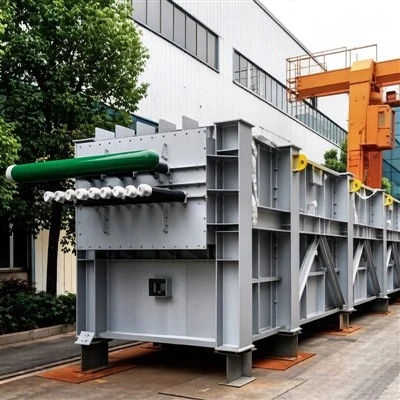
First off, let’s talk about what exhaust heat recovery systems (EHRS) are all about. These systems are pretty cool because they take the waste heat from exhaust gases and turn it into something useful, like electricity or heat for other processes. It’s a great way to boost energy efficiency and cut down on fuel costs. And that’s where exhaust gas temperature comes in super important.
The exhaust gas temperature is like the fuel for an EHRS. The higher the temperature of the exhaust gas, the more energy there is to be recovered. You see, heat transfer in these systems mainly depends on the temperature difference between the exhaust gas and the working fluid in the system. When the exhaust gas is hot, there’s a big temperature difference, and that means more heat can be transferred from the exhaust to the working fluid.
For example, let’s say you’re dealing with a high – temperature exhaust stream in an industrial furnace. The exhaust might be coming out at temperatures over 500 degrees Celsius. With these high temperatures, an EHRS can really shine. The heat exchanger in our system can absorb a significant amount of that heat, and then we can use it to do all sorts of things. Maybe it heats up water for a boiler or powers an organic Rankine cycle (ORC) to generate electricity.
On the flip side, when the exhaust gas temperature is low, things get a bit more tricky. A small temperature difference between the exhaust and the working fluid means less heat transfer. It’s like trying to heat a cold room with a tiny space heater. You’re not going to get a whole lot of heat transfer, and the EHRS won’t be as efficient. In some cases, if the exhaust gas temperature is too low, it might not even be worth installing an EHRS because the energy recovery just won’t be enough to justify the cost.
Now, different types of EHRSs work better at different temperature ranges. For instance, our basic heat exchangers are pretty good at handling moderate – temperature exhaust gases, say between 150 – 300 degrees Celsius. These are great for things like small – scale generators or domestic heating systems. They’re simple and cost – effective, and they can still recover a decent amount of heat in these temperature ranges.
But if you’ve got a really high – temperature exhaust, like from a large – scale power plant or a heavy – duty industrial process, you’re going to want a more advanced EHRS. Our high – performance systems with advanced heat transfer materials and designs are built to handle exhaust gases well over 500 degrees Celsius. These systems can recover a huge amount of energy, and they’re essential for industries looking to really cut down on their energy costs.
Another thing that affects the performance of an EHRS related to exhaust gas temperature is the flow rate of the gas. Even if you have a high – temperature exhaust, if the flow rate is too low, the heat transfer might still be limited. The heat exchanger needs a certain amount of gas flow to effectively transfer the heat. On the other hand, if the flow rate is too high, it can create pressure drops in the system, which can reduce the overall efficiency.
So, when we’re setting up an EHRS for a customer, we take a close look at the exhaust gas temperature and flow rate. We do some calculations and figure out the best system for their needs. We also consider other factors like the type of exhaust gas (is it corrosive? Does it have particulate matter?) and the specific requirements of the customer’s process.
Let me give you an example of how important exhaust gas temperature is in a real – world scenario. We had a client in the food processing industry. They had an old boiler system that was wasting a lot of heat in the exhaust gases. The exhaust gas temperature was moderately high, around 250 degrees Celsius. We installed one of our mid – range EHRSs. The system was able to recover a significant amount of that waste heat and use it to pre – heat the water for the boiler. This not only saved them a ton of money on fuel costs but also reduced their carbon footprint.
If they had a lower exhaust gas temperature, say 100 degrees Celsius, the same system wouldn’t have been as effective. We might have had to come up with a different solution, like a more advanced heat exchanger or a system that can work better with low – temperature heat sources.
In summary, the exhaust gas temperature is a key factor in determining the performance of an exhaust heat recovery system. The higher the temperature, the more potential there is for energy recovery, but we also have to consider other factors like flow rate and the specific requirements of the application.
We’ve spent a lot of time and effort developing our EHRSs to work efficiently across a wide range of exhaust gas temperatures. Whether you’re dealing with low – temperature exhausts from a small – scale operation or high – temperature gases from a large industrial plant, we’ve got a solution for you.
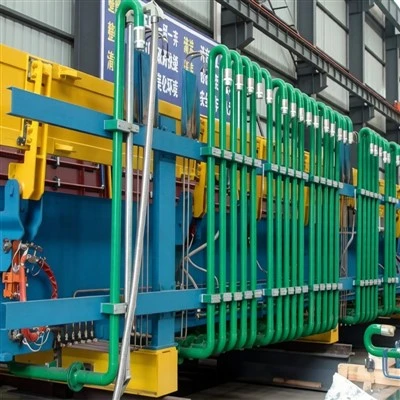
If you’re interested in learning more about how our exhaust heat recovery systems can work for your business, or if you want to discuss the specific exhaust gas conditions you’re dealing with, don’t hesitate to reach out. We’re here to help you save energy and money, and we’re confident that our systems can make a big difference for your operation. Just drop us a line, and we’ll start the conversation about finding the perfect EHRS for you.
Furnace Tube References
- "Heat Transfer Principles and Applications" by Holman, J. P.
- "Thermodynamics: An Engineering Approach" by Cengel, Y. A., & Boles, M. A.
- Industry reports on exhaust heat recovery system performance and research studies on exhaust gas temperature effects.
Jiangsu Dongfang Whole-Set Equipment Manufacturing Group Co., Ltd.
We are one of the most professional exhaust heat recovery system manufacturers and suppliers in China, also support customized service. With abundant experience, we warmly welcome you to buy durable exhaust heat recovery system from our factory. If you have any enquiry about pricelist, please feel free to email us.
Address: No. 9, Industrial Park, Xinqiao Town, Jingjiang City, Jiangsu Province
E-mail: dfctwm@163.com
WebSite: https://www.dongfangequip.com/
