As a supplier of commercial and engineering trucks, I’ve witnessed firsthand the challenges and requirements associated with parking these large vehicles. In this blog, I’ll share insights into the key requirements for commercial and engineering truck parking, drawing on my experiences in the industry. Commercial and Engineering Trucks
Space Requirements
One of the most fundamental requirements for commercial and engineering truck parking is adequate space. These vehicles are significantly larger than regular passenger cars, often requiring more room for maneuvering and parking. For commercial trucks, such as semi – trailers, the length can range from 40 to 53 feet, and they need a wide turning radius to enter and exit parking spaces safely. Engineering trucks, like dump trucks or concrete mixers, also have large dimensions and may need additional space for their specialized equipment, such as raised dump beds or rotating mixers.
A standard parking space for a passenger car is typically around 9 feet wide and 18 feet long. In contrast, a commercial truck parking space should be at least 12 feet wide and 45 feet long to accommodate the vehicle and allow for some clearance. For engineering trucks, the space requirements can be even more substantial, depending on the type of equipment they carry. For example, a large dump truck may need a space that is 14 feet wide and 50 feet long to ensure ease of access and safety.
Moreover, the layout of the parking area is crucial. There should be sufficient aisle space between parking rows to allow trucks to enter and exit without colliding with other vehicles. Aisle widths for commercial and engineering truck parking should generally be at least 24 feet wide for one – way traffic and 36 feet wide for two – way traffic. This allows trucks to make the necessary turns and maneuvers safely.
Surface Conditions
The surface of the parking area must be able to support the heavy weight of commercial and engineering trucks. These vehicles can weigh several tons, and a weak or damaged surface can lead to sinkholes, cracks, and other hazards.
For light – duty commercial trucks, a well – compacted asphalt surface may be sufficient. Asphalt is relatively inexpensive and can provide a smooth driving surface. However, for heavy – duty engineering trucks, a concrete surface is often preferred. Concrete is more durable and can withstand the high point loads exerted by the trucks’ tires and axles.
The surface should also be properly drained to prevent water accumulation. Standing water can cause damage to the vehicle’s undercarriage and tires, and it can also create slippery conditions, increasing the risk of accidents. Drainage systems, such as gutters and storm drains, should be installed to ensure that water is quickly removed from the parking area.
Safety Features
Safety is of utmost importance in commercial and engineering truck parking. The parking area should be well – lit to ensure that drivers can see clearly, especially during night – time operations. Adequate lighting reduces the risk of accidents and makes it easier for drivers to identify obstacles and other vehicles. Lights should be installed at regular intervals throughout the parking area, with a focus on entrances, exits, and aisles.
Traffic control measures are also essential. Clear signage should be posted to indicate parking spaces, no – parking zones, speed limits, and direction of traffic flow. Pavement markings should be used to delineate parking spaces and aisles, making it easier for drivers to navigate the area.
In addition, safety barriers and curbs can be installed to prevent trucks from accidentally driving off the parking area or colliding with other structures. These barriers should be strong enough to withstand the impact of a large truck and should be located where they are most needed, such as along the edges of the parking lot or around obstructions.
Accessibility
Easy access to the parking area is crucial for commercial and engineering trucks. The entrance and exit paths should be wide enough and have appropriate slopes to accommodate the size and turning radius of the trucks. Ramps for trucks should have a maximum grade of 1:12 (8.33%) to ensure safe and efficient climbing and descending.
The parking area should also be located in a convenient location, close to major roads or highways. This reduces travel time and fuel consumption for truck drivers, making it more efficient for them to access the parking space. Additionally, proximity to services such as fuel stations, repair shops, and rest areas can be a significant advantage for commercial and engineering truck operators.
Compliance with Regulations
Commercial and engineering truck parking must comply with local, state, and federal regulations. These regulations often cover aspects such as maximum parking times, noise restrictions, and environmental requirements.
For example, some areas have restrictions on how long a commercial truck can park in a particular location to prevent long – term storage. There may also be noise regulations in place to limit the impact of truck engines and operations on nearby residential or commercial areas. Environmental regulations may require that parking areas have proper waste management systems to handle oil spills, tire debris, and other waste generated by the trucks.
It is the responsibility of the parking facility owner and the truck operators to ensure compliance with these regulations. Failure to comply can result in fines and other penalties.
Security
Security is a major concern for commercial and engineering truck parking. These vehicles are valuable assets, and they often carry expensive cargo. A secure parking area can help prevent theft, vandalism, and unauthorized access.
Security measures can include fencing around the perimeter of the parking area, access control gates, and surveillance cameras. Fencing should be tall and sturdy enough to prevent easy entry, and access control gates can be equipped with key cards, keypads, or security personnel to ensure that only authorized vehicles can enter. Surveillance cameras can be installed at strategic locations throughout the parking area to monitor activity and deter criminal behavior.
In addition, security personnel may be on – site to patrol the area and respond to any security incidents. This provides an extra layer of protection for the trucks and their cargo.
As a supplier of commercial and engineering trucks, I understand the importance of providing our customers with appropriate parking solutions. Meeting these parking requirements not only ensures the safety and convenience of the truck operators but also helps to protect the value of the vehicles and cargo.
If you are in the market for commercial or engineering trucks and are concerned about parking requirements, or if you are looking for trucks that are well – suited to your specific parking and operational needs, I invite you to reach out to us. We can provide you with detailed information about our truck models and offer guidance on parking and related considerations.
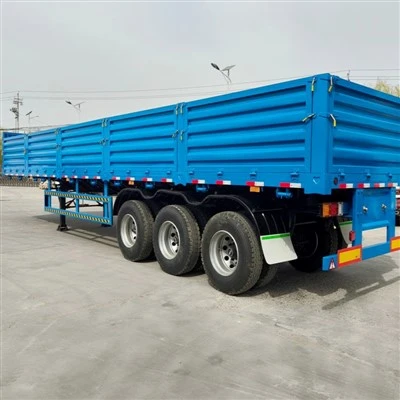
Stake Semi-Trailer Let’s work together to find the best solutions for your commercial and engineering truck needs!
References
- American Association of State Highway and Transportation Officials (AASHTO). "A Policy on Geometric Design of Highways and Streets."
- National Fire Protection Association (NFPA). Fire codes related to vehicle parking and storage.
- Local and state transportation department regulations on commercial vehicle parking.
Jining Dafu Machinery Sales Co., Ltd.
As one of the most professional commercial and engineering trucks suppliers in China, we’re featured by quality products and low price. Please rest assured to wholesale bulk cheap commercial and engineering trucks from our factory. We also accept customized orders.
Address: Room 1-115, Building 7, Luxinan Auto Parts City, Qiantongdian Village, Quanpu Town, Liangshan County, Jining City, Shandong Province
E-mail: jiningdafu@163.com
WebSite: https://www.dafumachinery.com/
